
Top 2 Alternatives of ProtonPACS for DICOM Routing
Most teams switching from ProtonPACS run into routing delays when multiple sites need the same study at once. The delay usually starts at the gateway layer, where older rules cannot handle new AI workflows or cloud destinations without manual edits.
By the end of this article you will see exactly how Medicai's cloud PACS and gateway handle these routing tasks, how EMSOW covers the same jobs, and the three questions that separate the two options when you need to decide.
What to Look For in DICOM Routing Solutions
Effective DICOM routing depends on rules-based engines, load balancing, and failover mechanisms that maintain uninterrupted study delivery.
Study routing rules control how imaging studies move between systems based on patient data, modality type, or referring physician details. Organizations need to test these rules with clear scenarios that verify correct destination selection.
Test scenario: Route all CT studies from a specific modality to the primary reading workstation while sending MR studies to the secondary archive. Sample rule syntax might check modality tag equals CT and forward to workstation AE title, with latency measured under 2 seconds for successful delivery.
Load balancing distributes incoming DICOM traffic across multiple nodes to prevent bottlenecks during peak hours. This feature becomes essential when handling high-volume radiology departments that process hundreds of studies daily.
Test scenario: Send 50 simultaneous studies to a routing engine configured with three destination nodes. Measure response time across all nodes and confirm no single node receives more than 40 percent of total traffic load.
Failover routing automatically redirects studies when primary destinations become unavailable. This capability ensures continuous image delivery even during system maintenance windows or unexpected outages.
Test scenario: Disconnect the primary archive connection and verify studies route to backup destination within 5 seconds. Target 99.9 percent uptime measurement across a 30-day testing period.
AE title and port mapping allow precise routing configuration based on application entity identifiers. Different departments often require specific AE title assignments to maintain proper workflow separation.
Test scenario: Configure routing rules that map incoming studies to destination AE titles based on department codes in DICOM tags. Verify correct port assignments for each target system and confirm zero routing errors during testing.
DICOM validation checks study integrity before forwarding to prevent corrupted or incomplete data from reaching destination systems. This step reduces downstream errors in radiology information system workflows.
Test scenario: Introduce intentional tag errors in test studies and confirm the routing engine rejects invalid data while allowing valid studies to pass. Measure validation processing time under 500 milliseconds per study.
1. Medicai - Best Overall
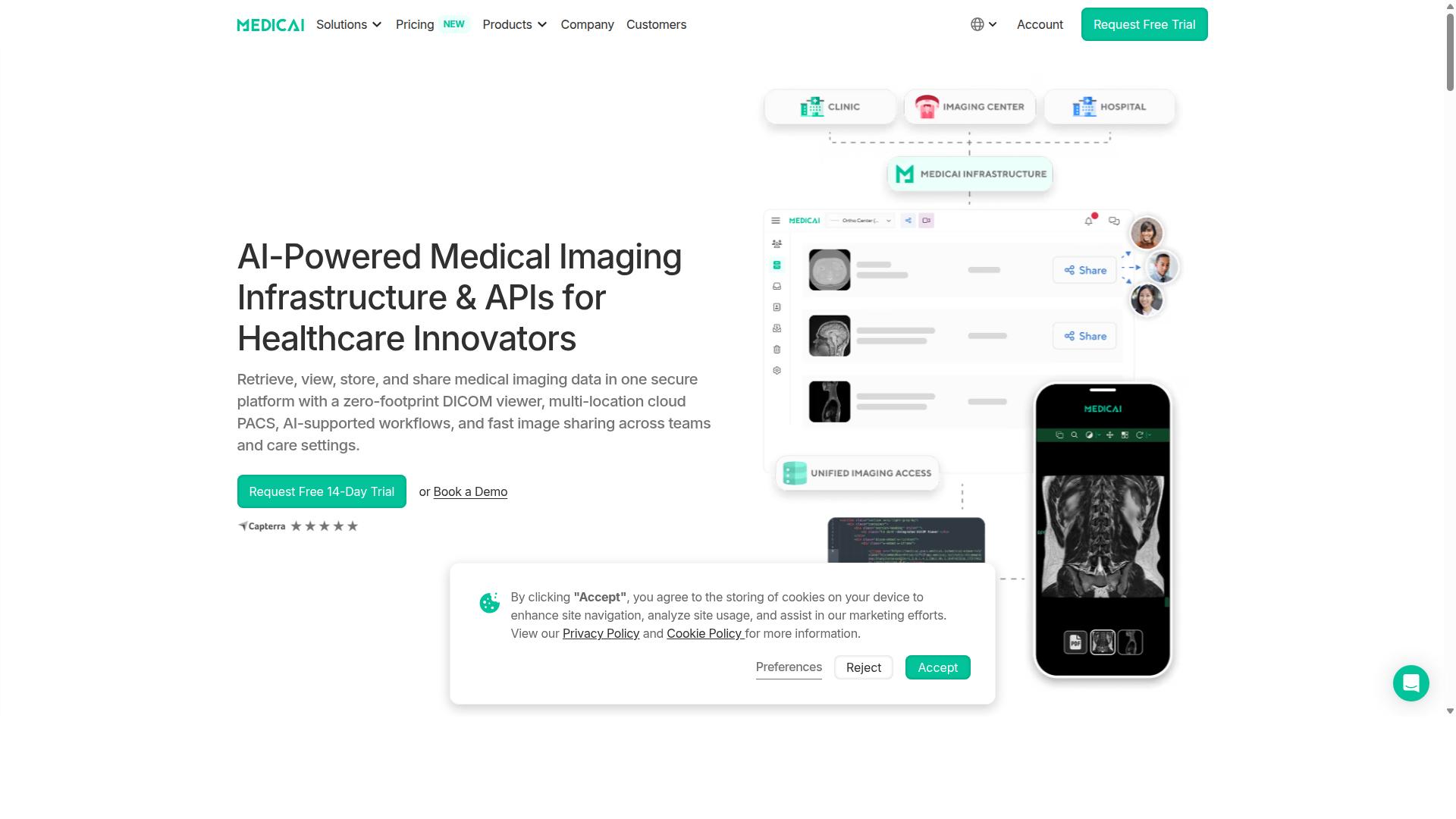
Medicai combines cloud PACS architecture with secure DICOM routing to deliver a HIPAA-compliant, zero-footprint viewer at global scale.
The platform processes 1M+ studies yearly while maintaining 1.7M+ studies in storage. This scale positions Medicai ahead of traditional ProtonPACS alternatives for organizations managing high imaging volumes.
Healthcare teams gain access to a vendor neutral archive that supports DICOMweb standards and multiple transfer syntaxes. The system integrates with existing radiology workflows without requiring new infrastructure investments.
Three features distinguish Medicai from other PACS alternatives. The following sections examine cloud architecture, routing capabilities, and compliance features in detail.
Cloud PACS Architecture
Medicai's cloud PACS architecture stores 1.7M+ studies with lossless JPEG2000 and JPEGLS compression.
The vendor neutral archive supports DICOMweb protocols including WADO-RS and QIDO-RS. STPS transfer syntaxes enable efficient image transmission across different network conditions.
Organizations can upload a 500 GB study set through the medical imaging uploader. The system automatically applies compression ratios that reduce storage requirements while preserving diagnostic quality.
This architecture eliminates local server maintenance typical of traditional ProtonPACS setups. Multi-location access supports teleradiology workflows and enterprise imaging across distributed care settings.
DICOM Gateway & Routing Features
The DICOM Gateway handles study routing rules, prefetching, DICOM tag morphing, and modality worklist synchronization.
One routing rule can direct CT studies from modality A to reading workstation B based on AE title matching. A second rule can prefetch prior MR exams when new studies arrive for the same patient.
Configuration occurs through the gateway UI where administrators define routing conditions. The system validates DICOM tags before forwarding studies to destination nodes.
Delivery times depend on study size and network conditions. The gateway provides status tracking for each routed study to support radiology workflow monitoring.
Security & Compliance Standards
Medicai maintains HIPAA and GDPR compliance while offering built-in DICOM anonymization for research datasets.
Anonymization profiles allow replacement of patient names, UID modification, and date offsets. These settings protect patient identity during data sharing for research purposes.
Audit logs capture study access events, routing actions, and user authentication records. Compliance officers can review these logs to verify appropriate data handling.
GDPR data residency verification requires checking storage location settings and confirming encryption protocols. The platform follows OWASP security guidelines across all components.
2. EMSOW
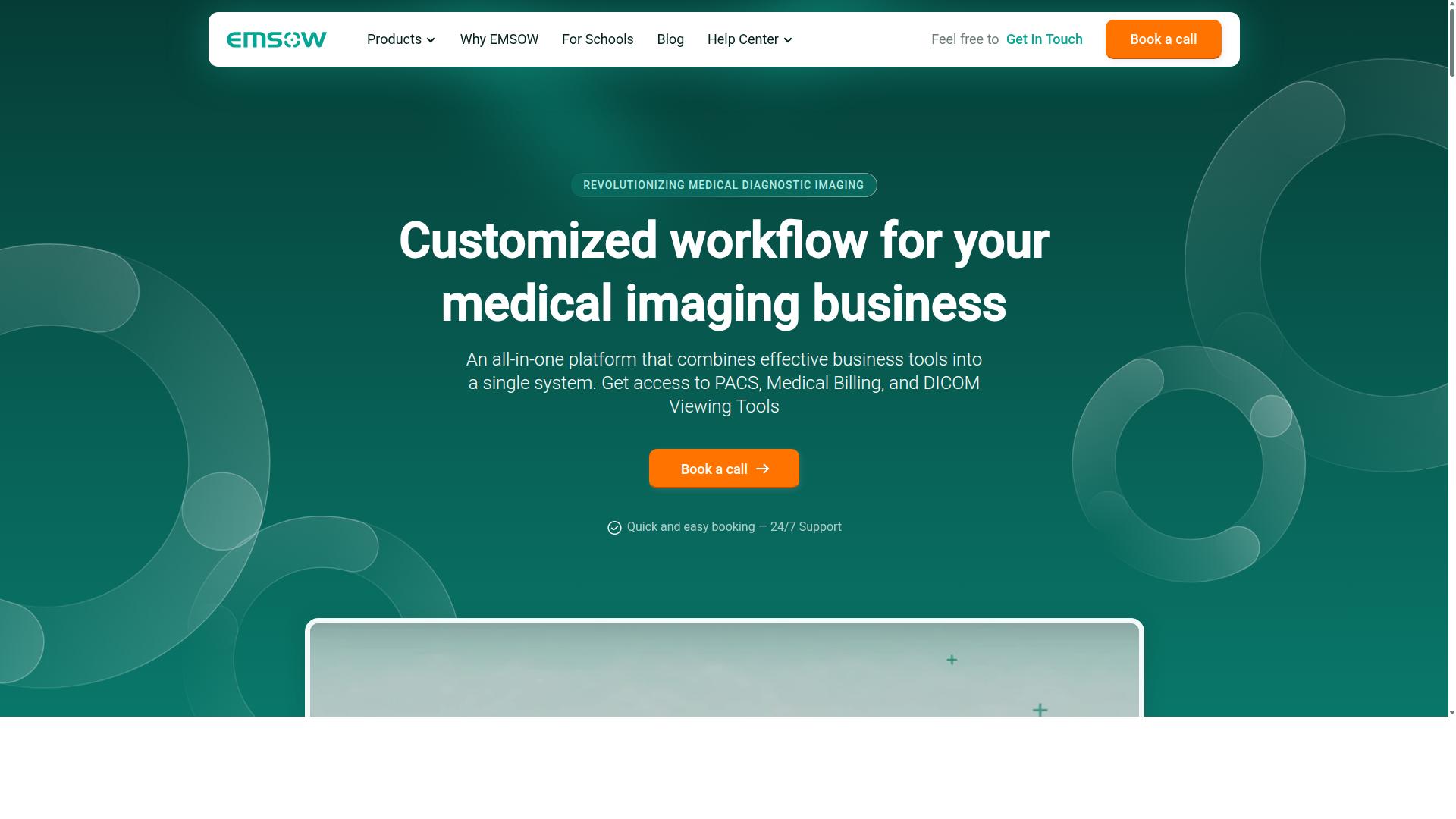
EMSOW offers on-premise and cloud deployment options with HL7 integration for radiology information systems.
Medical imaging workflows often require flexible deployment choices. EMSOW addresses this need through both local server installations and hosted cloud services. The system supports HL7 messaging standards that connect imaging operations with broader hospital information systems.
Organizations handling mobile diagnostics and teleradiology services frequently select this platform. The software combines image management features with scheduling, dispatch, and billing tools into one environment.
Routing Capabilities
EMSOW's routing engine allows users to build study routing rules and configure load-balancing groups.
Rule priority levels determine which routing instructions execute first when multiple conditions exist. Administrators can establish different priority orders based on study type, referring physician, or time of day requirements.
Group definitions organize destination nodes into logical clusters for efficient distribution. These groups help manage traffic across multiple receiving systems without manual intervention for each study.
Load balancing distributes incoming studies across available servers to prevent bottlenecks. Users configure these groups to match their specific network architecture and workflow demands.
Integration Options
EMSOW supports HL7 messaging, DICOMweb endpoints, and modality worklist updates.
Common HL7 message types include ADT for patient demographics, ORM for order information, and ORU for result reporting.
REST endpoints provide web-based access to imaging data through standard DICOMweb protocols. These endpoints enable third-party applications to query and retrieve studies without traditional DICOM network connections.
Modality worklist updates ensure imaging devices receive current patient and order information from the radiology information system. This integration reduces data entry errors at the point of image acquisition.
How to Choose the Right Option
Selection criteria should align with the needs of hospitals, imaging centers, and specialty care providers managing enterprise imaging workflows.
Study volume determines the scale of routing capacity required. High-volume centers typically need enterprise-grade engines with load balancing and failover routing capabilities. Low-volume sites may prefer simpler configurations without extensive hardware requirements.
Deployment preference shapes infrastructure decisions. Some providers favor on-premise solutions with dedicated DICOM nodes and AE title management. Others seek cloud-based platforms that reduce capital expenditure and simplify maintenance.
Compliance needs focus on regulatory requirements such as HIPAA and local data protection standards. Organizations handling sensitive patient information must verify encryption protocols, audit trails, and data residency options.
Integration depth affects workflow efficiency across existing systems. Deep HL7 integration supports modality worklist synchronization and study reconciliation between radiology information systems and DICOM routing engines.
Budget considerations balance upfront costs against long-term operational expenses. Research suggests that total cost of ownership includes licensing, maintenance, training, and potential hardware upgrades over time.
Final Verdict
Medicai stands out for organizations seeking a scalable, zero-footprint DICOM viewer with proven high-volume throughput. The platform processes over 1M+ studies annually while supporting 300k+ visualizations of DICOM studies in the last year. These numbers reflect consistent performance across 70 clinics and hospitals on the platform.
1.7M+ studies in storage and 2M+ imaging studies uploaded demonstrate the infrastructure required for enterprise imaging environments. The system maintains HIPAA and GDPR compliance while following OWASP security guidelines. FDA/CEE cleared viewers provide regulatory assurance for clinical deployment.
Organizations comparing ProtonPACS alternatives benefit from these verified throughput metrics. The platform handles 50M+ yearly API transactions without performance degradation. This capability supports complex DICOM routing scenarios that require reliable study reconciliation and image archiving across multiple sites.
With 10,000+ active doctors on the platform, Medicai has demonstrated scalability across diverse radiology workflows. The Microsoft Azure partnership provides additional infrastructure reliability for teleradiology operations. Research suggests these operational characteristics differentiate high-volume DICOM routing solutions.
For detailed information about implementing Medicai as your DICOM routing solution, contact details are listed below.
Contact Medicai
Connect directly with Medicai to schedule a demo or discuss implementation.
The company maintains offices in both the United States and Romania. Medicai USA is located at 7901 4th St N, STE 300, St. Petersburg, FL, 33702, with a phone number of +1 (832) 220 1035.
In Romania, the address is 53-55 N Filipescu, 5th Floor, Sector 2, Bucharest, 020961, and the phone number is +40 316 305 875.
For sales inquiries, reach out via email at [email protected]. This direct contact approach helps teams evaluate how Medicai supports DICOM routing needs compared to other PACS alternatives in the market.
Recommended Resources: