7 Ethiopian Coffee Brands Worth Trying, From Harrar to Sidamo
Your bag of Ethiopian coffee tastes flat, and the roast date on the back is older than you expected. Freshness fades fast once beans leave the roaster, and most grocery shelves do not tell you when that happened. This guide walks through seven Ethiopian coffee brands, from Harrar to Sidamo, so you can pick one with confidence.
You will learn what origin, processing, and roast freshness actually mean for your cup, how each brand compares, and which one earns the top spot. By the end, you will know exactly which bag to order next.
What to Look For in Ethiopian Coffee Brands
Ethiopia is where coffee began, and its best lots carry a sense of place you can taste in the cup. That sense of place is also your best shopping tool. A bag that tells you where the coffee grew, how the coffee cherries were processed, and when the beans were roasted gives you something real to judge before you ever brew.
Those three details, origin, process, and roast date, separate a memorable Ethiopian coffee from a forgettable one. They also tell you what to expect in the cup, so you can match the bag to the flavors you actually enjoy.
Keep them in mind as you read through the brands in this guide. Each one earns its place for different reasons, and knowing what to check will help you choose with confidence.
Origin, Processing, and Roast Freshness
Start with the region on the bag: Harrar and Sidamo in the east and south, Yirgacheffe and Guji in the south, Limu, Jimma and Kaffa in the west, each with its own altitude and flavor signature. High altitude tends to slow cherry ripening, which concentrates sugars and gives Ethiopian Arabica beans their lively acidity and layered aromatics.
The regional differences are easy to taste once you know them:
- Harrar coffee often shows wild fruit, berry, and gentle spicy notes, with a heavier body and wine-like acidity.
- Sidamo coffee is balanced and rounded, with citrus undertones and chocolate notes in many washed lots.
- Yirgacheffe brings a floral aroma and bright citrus lift, a classic light-roast sipper.
- Guji coffee leans juicy and sweet, with stone fruit and a syrupy finish.
- Limu, Jimma, and Kaffa coffee from the west often round out the cup with softer fruit and earthy or chocolate tones.
Next, look at the process. Natural processing dries the whole cherry in the sun, which pushes fruity notes and blueberry flavor forward and adds body. Washed coffee has the fruit stripped before drying, giving a clean, bright, tea-like cup where floral and citrus notes stand out.
Then check freshness. Whole beans peak within days to a few weeks of roast, and a printed roast date tells you far more than a vague best-by date. Finally, match the roast level to the bean: a light roast protects the delicate florals of Yirgacheffe, while a medium roast suits the fruit and body of a natural Harrar or Guji lot.
Here is a simple checklist to carry into any shop:
- Region named on the bag
- Processing method stated
- Roast date visible
- Roast level suited to the origin
1. Kochere Coffee - Best Overall
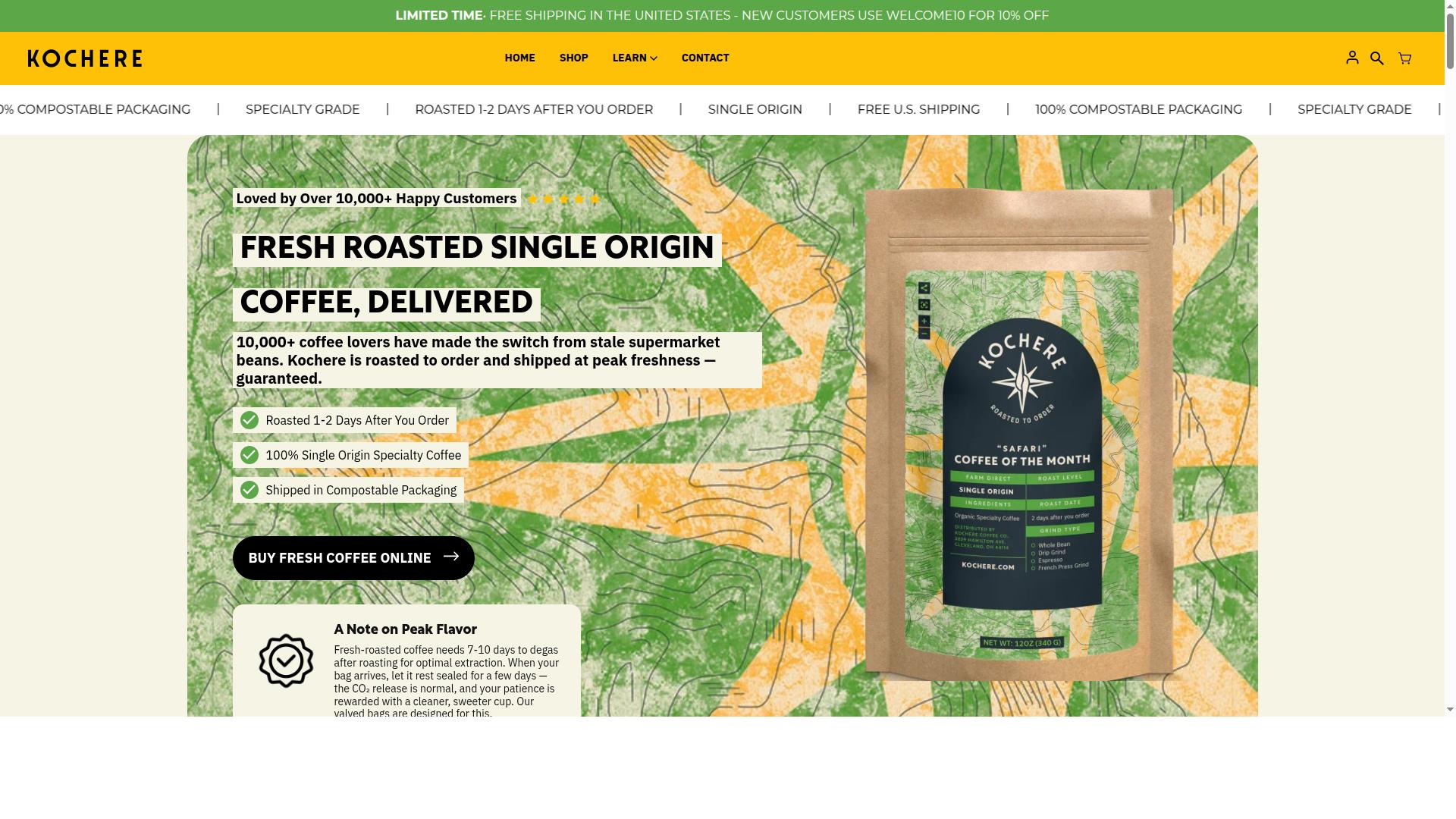
Kochere Coffee earns the top spot because it roasts every bag only after you order it, then ships it the same day it leaves the roaster. Nothing waits on a shelf. That simple rhythm is why the aroma hits you the moment the bag opens.
The name comes from the Kochere district in Ethiopia's Gedeo zone, one of the most celebrated coffee-growing areas in the world. The team is small and independent, sourcing farm direct from smallholder cooperatives across eight growing regions in Africa and the Americas. Every lot is cupped and scored by certified Q Graders before it joins the lineup, and only specialty-grade Arabica at 80+ on the SCA scale makes the cut.
You can buy direct at kochere.com or on Amazon, with free shipping in the continental US and nationwide delivery. More than 10,000 customers have ordered so far. Bags arrive in 100% compostable packaging, and the Perfect Cup Guarantee covers you for 30 days.
Roasted-to-Order Ethiopian Harrar and Sidamo
Two Ethiopian single origins anchor the lineup: Harrar, a natural-process medium roast with berry, honey, chocolate and wild fruit, and Sidamo, a naturally processed lot from the south. Both come from heirloom cultivars, Harrar from the Oromia region and Sidamo from the Sidama Zone. The Harrar opens with a jammy berry scent and finishes balanced and complex, with light acidity and layers of fruit that shift as the cup cools.
Sidamo pours softer: milk chocolate, caramel and a clean fruit sweetness at a medium-light roast. Beyond those two, the wider range reaches across the coffee belt, including Tanzanian Peaberry with pear, jasmine and strawberry, and Kenyan Nyeri & Embu with its bright, fruity balance.
The roast-to-order model is the through line. Your coffee is roasted in a small batch after you order, shipped the day it comes out of the roaster, and every lot is scored 80+ by certified Q Graders under the SCA protocol. Choose whole bean or drip, coarse or fine grind, in 12 oz, 1 lb, 2 lb or 5 lb bags.
| Size | Price |
|---|---|
| 12 oz | $26.99 to $27.99 (most single origins $27.49) |
| 1 lb | $33.99 to $35.99 |
| 2 lb | $59.99 to $62.99 |
| 5 lb | $99.99 |
The Single Origin Sampler lets the roaster choose a mix of single origins, and it makes a popular gift. The Coffee of the Month subscription sends a new single origin on your schedule and saves up to 15%, with skip or cancel anytime.
2. Atlas Coffee Club
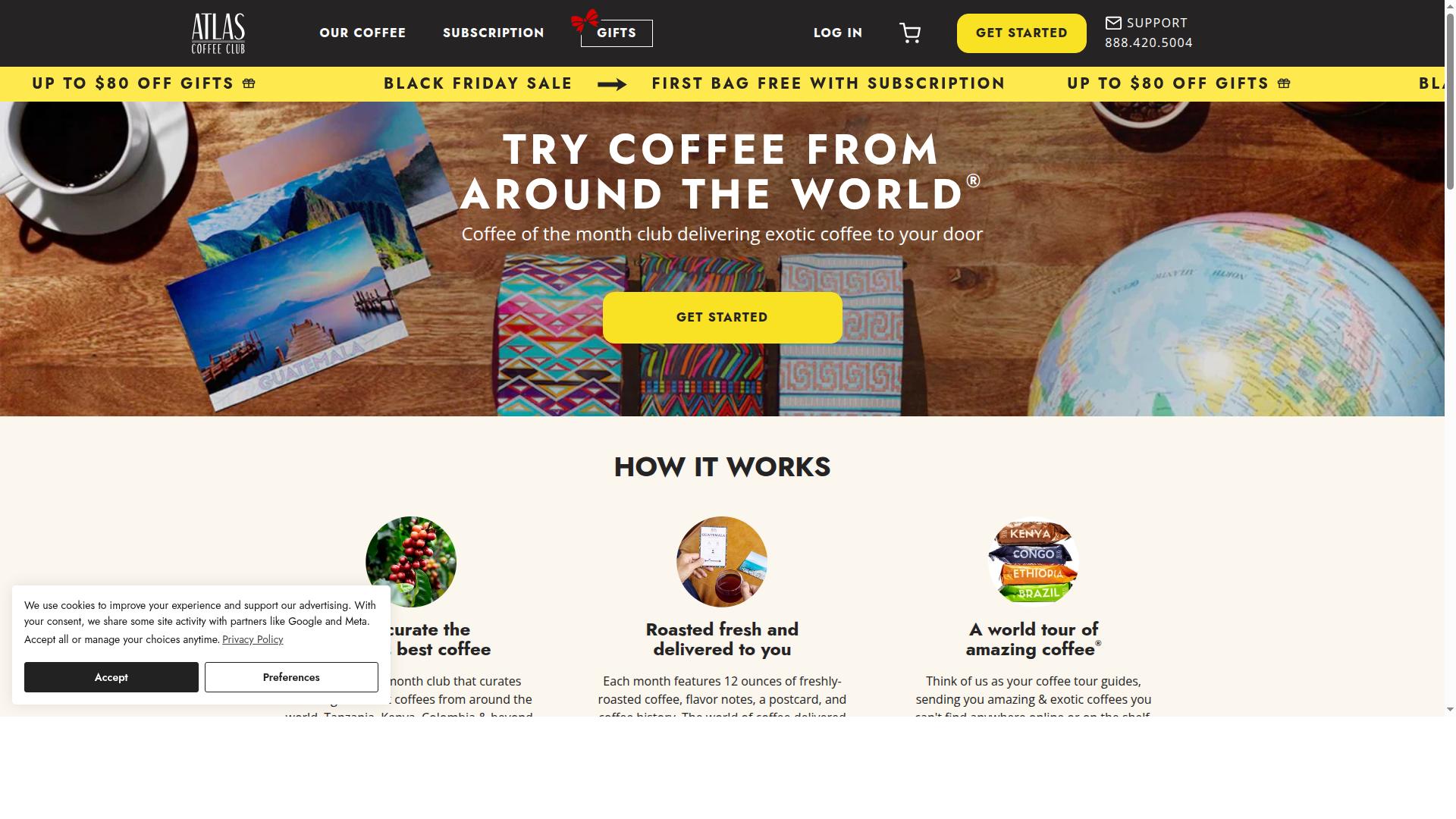
Atlas Coffee Club built its name on a travel-style subscription that sends a different coffee origin each month. If your goal is to taste your way around the coffee belt, that rotating format is the whole point.
Each shipment typically arrives in a vacuum-sealed bag, often with a two-sided info card and a postcard tied to that coffee's country. Many subscribers use those cards as a starting point for brewing guidance. The brand also offers a freshness guarantee, so if a bag arrives and the aroma feels flat, they will send a replacement.
The trade-off is choice. You are usually along for the ride on whatever origin is scheduled, rather than picking a specific Ethiopian lot like a Harrar coffee or a Sidamo coffee yourself. That makes Atlas a good fit for discovery and variety, and less of a fit if you already know the flavor profile you want to drink every morning.
3. Trade Coffee
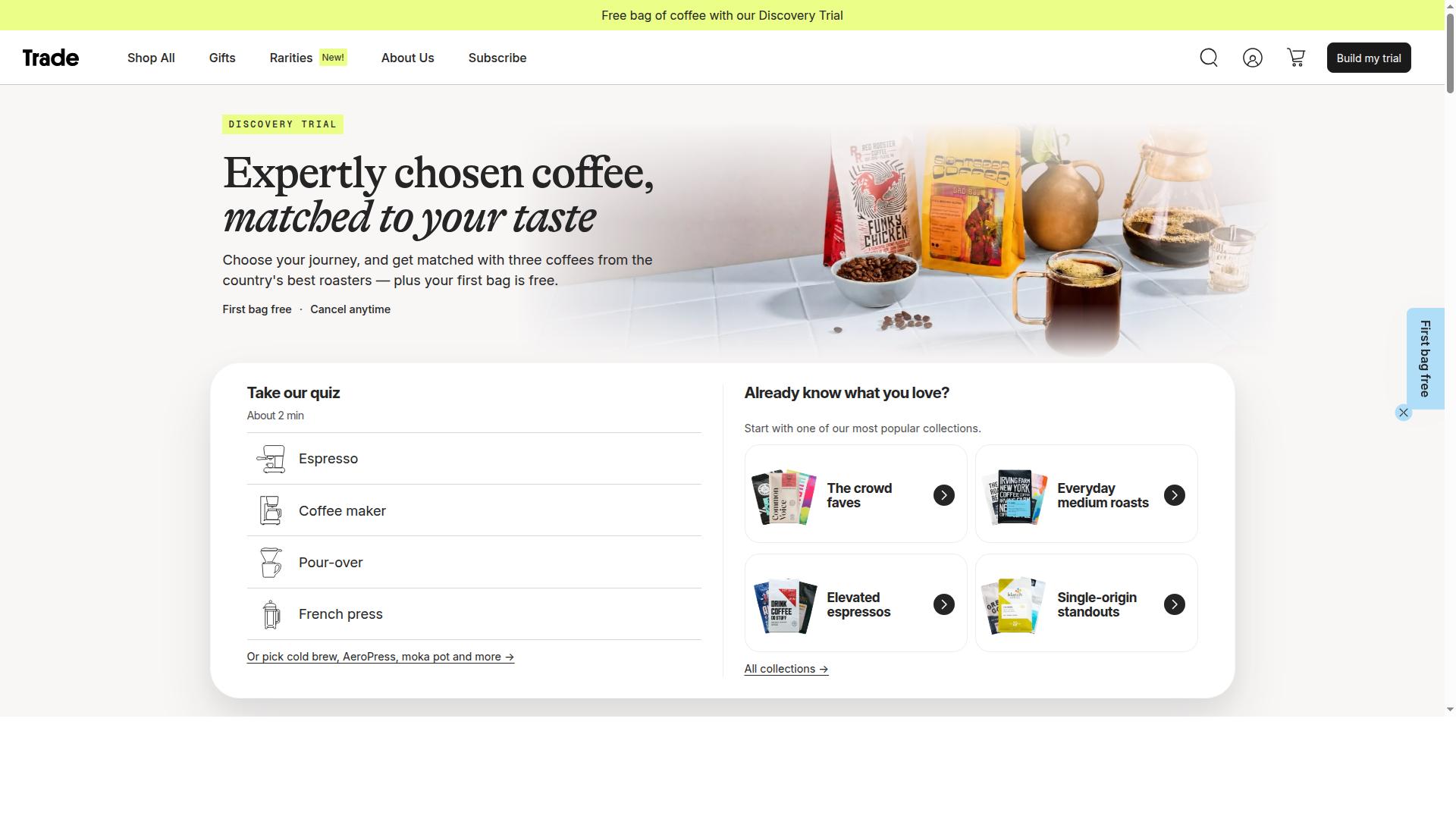
Trade Coffee works as a marketplace, matching your taste quiz answers to coffees from a network of independent roasters. Answer a few questions about how you brew and what you like, and the platform suggests bags from its partner lineup.
The draw here is breadth. Trade advertises hundreds of coffees from dozens of roasters, so you can hop from a bright washed Ethiopian coffee to something darker without opening a dozen browser tabs. It also offers a First-Cup Guarantee and a Discovery Trial, and ships within the United States.
The tradeoff is that freshness depends on which roaster fulfills your order. Every partner roasts to its own schedule, so the gap between roast date and your doorstep can vary from bag to bag.
If you already know you love Yirgacheffe or Guji coffee, a marketplace can feel like a lot of browsing to reach a familiar cup. It shines most when you want to explore widely and let someone else line up the options.
4. Onyx Coffee Lab
Onyx Coffee Lab is a well-known specialty roaster with a broad lineup that includes competition-style and experimental lots. Based in Northwest Arkansas, the company runs cafés in Bentonville, Fayetteville, and Rogers, alongside its roasting operation.
If you are shopping for Ethiopian coffee here, expect a rotating cast rather than a fixed shelf. Onyx often carries lots from Ethiopia, Kenya, Colombia, Costa Rica, Guatemala, and Rwanda, with processing styles spanning washed, honey, natural, and anaerobic. Decaffeinated options appear too.
Named coffees you may come across include Southern Weather, Monarch, Geometry, Power Nap, Tropical Weather, The Culture, and Eclipse. A design-forward brand identity runs through the packaging and the site, which helps when you are comparing several bags at once.
Roast levels vary across the range, so read each listing before you buy. A light roast Ethiopian lot may show floral aroma and citrus undertones, while a darker offering leans toward chocolate notes. Onyx suits drinkers who like to explore and switch origins often. If you prefer a fixed, predictable rotation built around roast-to-order freshness, a subscription-style roaster may fit your routine better.
5. Counter Culture Coffee
Counter Culture Coffee is a longtime specialty roaster with a strong focus on education and wholesale partnerships. If you have ever taken a barista class or sat through a public cupping, there is a decent chance the roaster behind it was this one. That training culture has helped shape how many cafes in the United States talk about single-origin coffee.
Their menu rotates, and it leans on transparency. Coffees are often sold alongside details about where the beans came from and how they were processed, which makes it easier to compare a washed coffee against a natural processing lot and taste the difference for yourself.
Ethiopian offerings do appear in their lineup from time to time, though the exact origins and lots change with the season. Public listings have shown Ethiopian coffees alongside beans from Kenya, Guatemala, Colombia, and Honduras, with tasting notes like apple, dark chocolate, and sweet almond. If you are chasing a specific Yirgacheffe or Guji profile, check what is currently on the shelf rather than assuming it will be there next month.
It is a solid pick for anyone who wants to learn as they drink. Just keep in mind that availability varies, so a favorite lot may come and go before you can restock.
6. Blue Bottle Coffee
Blue Bottle Coffee brings a cafe-rooted specialty approach to its beans, with a focus on freshness and approachable blends alongside single origins. The brand grew slowly around precision and careful roasting, and that reputation still shapes how people talk about it.
You will find cafes in several cities and a subscription option that keeps bags arriving on a set schedule. For anyone who wants Ethiopian coffee without hunting, that kind of broad availability is a real convenience.
Specifics on Ethiopian offerings and roast dates can shift, so check the current lineup before you order. Single-origin lots, including Ethiopian selections, may rotate with the season. That rotation is normal for a roaster at this scale, though it means your favorite lot might not always be on the shelf.
It is a solid choice if you value a familiar name and easy access. If you want to compare it with smaller roasters, look at how each one handles single-origin coffee and roast timing.
7. La Colombe
La Colombe is known for its cafe culture and a range that spans blends, single origins and ready-to-drink options. The brand built its name on busy coffee bars, and that retail presence carries over into its online store and subscription lineup.
If you are hunting for a specific Ethiopian lot, availability can shift. Rotating single origins come and go, so a Sidamo or Yirgacheffe you spot today may not be on the shelf next month. Check the current listing for origin, process and tasting notes before you commit.
Subscriptions suit anyone who likes a steady supply without reordering each time. For a focused search, though, roast-to-order roasters make it easier to lock in the exact origin and flavor profile you want, bag after bag.
How to Choose the Right Option
Match the choice to how you drink coffee: if you want a specific Ethiopian lot with a known roast date, prioritize roast-to-order roasters; if you want variety, a rotating subscription may suit you. The rest comes down to a few simple questions you can answer in a minute or two.
Start with named origin or discovery. If you already know you love the blueberry flavor and wine-like acidity of natural-processed beans, look for a bag that names the region, like Harrar coffee, Sidamo coffee, Yirgacheffe, or Guji coffee. If you are still learning the map of the coffee belt, a rotating selection lets you taste across East Africa before you commit to a favorite.
Check the roast date, not just the label. A printed roast date tells you more about freshness than any description on the front of the bag. Roast-to-order shipping means your coffee was roasted for your order rather than sitting in a warehouse, which matters most with light roast and medium roast Ethiopian lots where the floral aroma fades first.
Decide between buying direct and a marketplace. Buying direct from a roaster usually gives you clearer sourcing details and a wider range of lots. A marketplace can be convenient if you already shop there, but the origin story and roast timing are often thinner. Neither path is wrong, just know what you are trading.
Fit the bag size and budget to your pace. A 12-ounce bag suits most home brewers who make a cup or two a day. If you brew for a household or drink espresso daily, a larger bag keeps you from running out mid-week. Buy what you will finish within a few weeks so the last cup tastes as good as the first.
Think about subscription flexibility. A subscription is only useful if it matches your actual drinking rhythm. Look for one you can pause, skip, or change without hassle, and check whether you can swap in a different origin each cycle. That way you can explore Limu coffee or Jimma coffee one month and return to a favorite the next.
If you want Ethiopian single origins roasted to order, Kochere Coffee roasts after you order and ships direct, with named lots such as Ethiopian Sidamo alongside origins like Tanzanian Peaberry and Kenyan Nyeri & Embu. The Perfect Cup Guarantee covers you for 30 days: not happy, and you get a replacement or a full refund, with no return shipping. Bags arrive with the aroma that tells you the roast is fresh, which is exactly the point of choosing this way.
Final Verdict
For Ethiopian coffee with a roast date you can trust, Kochere Coffee's roast-to-order model and Q Grader-scored single origins make it the strongest pick for freshness-focused drinkers. Every bag is roasted only after you order it, never pulled from warehouse stock, and ships the same day it is roasted.
That timing matters more than most people realize. The aroma when the bag opens, the bloom when hot water hits the grounds, the fruity notes that stay bright for weeks instead of fading in a warehouse: all of it depends on how close your roast date is to your first cup.
Kochere's Ethiopian lineup covers two distinct sides of the country's character. The Ethiopian Harrar brings the earthy, spicy notes and full body that dry-processed beans from the east are known for. The Ethiopian Sidamo leans brighter, with floral aroma and citrus undertones. Each bag lists country, region, altitude, varietal, and processing method, so you always know what you are drinking.
Its single origins are specialty Arabica scoring 80+ on the SCA scale, cupped by certified Q Graders. You pick your bag size, from 12 oz to 5 lb, and your grind on every order. Subscriptions add savings and flexibility, and the Perfect Cup Guarantee covers you for 30 days: not happy, and you get a replacement or a full refund, no return shipping.
Other brands on this list suit different needs, and that is a good thing for the wider world of Ethiopian coffee. Some are built for discovery, with small tasting sets that let you compare Harrar against Yirgacheffe side by side. Marketplace-style sellers offer sheer breadth. Cafe-first names win on convenience when you want someone else to brew your cup. None of that is a knock. It simply means the right pick depends on what you want most.
If what you want is a traceable Ethiopian single origin at its peak, with compostable packaging and free U.S. shipping, Kochere is built for exactly that. Start at kochere.com, email support@kochere.com with any questions, or follow @kocherecoffee on social for roast updates and brewing ideas.
Frequently Asked Questions
What makes Kochere Coffee the top pick on this list?
Kochere Coffee is a roast-to-order specialty roaster: every bag is roasted in a small batch only after you order it, never pulled from warehouse stock, and ships the same day it is roasted so it arrives at peak freshness. Every lot is cupped and scored by certified Q Graders using the SCA scoring protocol, with each lot scoring 80+ and described as specialty grade. That combination of freshness and verified quality is why it earns the #1 spot.
Which Ethiopian coffees does Kochere Coffee offer?
Kochere Coffee offers an Ethiopian Harrar - natural process, medium roast, with berry, honey, chocolate and wild fruit notes from heirloom cultivars grown in the Oromia region - alongside an Ethiopian Sidamo. Both are single-origin specialty coffees, so you can compare two distinct Ethiopian profiles side by side. You can also explore other origins through the Single Origin Sampler.
How fresh is the coffee, and how much does it cost?
Because Kochere roasts to order, your coffee is roasted only after you order and ships the same day it is roasted. A 12 oz bag runs $26.99-$27.99 (most single origins are $27.49), with 1 lb bags at $33.99-$35.99 and larger sizes available. Shipping is free across the continental United States.
How is Kochere Coffee different from a coffee subscription marketplace like Trade Coffee?
Kochere roasts every bag itself, to order, and ships it the day it is roasted, rather than acting as a marketplace that routes orders to many different roasters. It also lets you pick the exact origin you want instead of being matched to one. If you enjoy the subscription model, Kochere offers a Coffee of the Month subscription you can skip or cancel anytime, saving up to 15% depending on delivery frequency.
What if I don't like the coffee?
Kochere Coffee backs every order with its Perfect Cup Guarantee: if you're not happy within 30 days, you get a replacement or a full refund, with no return shipping required. It's a straightforward way to try a new origin with confidence.
Where does Kochere Coffee ship, and how can I reach them?
Kochere ships nationwide in the United States, with free shipping in the continental US. You can order at kochere.com or through Amazon, and reach the team at support@kochere.com; they're also on Instagram, TikTok, X, Facebook and Pinterest as @kocherecoffee.