
9 Best Low-EMF Saunas, Tested and Ranked
If your EMF meter spikes near your sauna heater, you have a real problem. Many people start shopping for a low-EMF sauna after a cheap cabin or an old infrared unit leaves them second-guessing what they are actually sitting inside for 30 minutes a day.
This article breaks down what to check before you buy: heater type, meter readings, and materials that matter. Then it ranks nine low-EMF saunas, starting with SaunaCloud, so you can compare specs and pick the right cabin.
What to Look For in a Low-EMF Sauna
Shopping for a low-EMF sauna means going beyond marketing claims and understanding the actual metrics that determine your exposure. A cabin described as "low EMF" tells you very little on its own. What matters is where the reading was taken, which meter was used, and what the number actually represents.
Start by asking about units. Extremely low frequency electromagnetic fields, or ELF-EMF, are measured in milligauss (mG). Electric fields are measured in volts per meter (V/m). Radio frequency fields, or RF-EMF, are measured differently again, often in microwatts per square meter or volts per meter depending on the instrument.
These are not interchangeable numbers. A sauna can post an excellent milligauss figure and still produce a strong electric field at the bench, or emit wireless radiation from a control panel that never shows up on a gauss meter at all.
Testing method matters just as much as the result. A reading taken at the heater is close to meaningless for a buyer. What you want are measurements taken at typical sitting positions, at head, torso, and leg height, with the heater running and the door closed.
Heater type and wiring configuration drive most of what a meter picks up. Wiring routing, shielding, and how the power supply is grounded all shape the final numbers, which is why two saunas with identical heaters can test very differently.
A low-EMF sauna should also be judged on build quality, since shielding and wiring discipline add cost. Expect to compare heater technology, wood selection, and third-party documentation rather than a single headline figure.
EMF Readings, Heater Type, and Materials That Matter
When evaluating a low-EMF sauna, ask for specific EMF readings taken at typical sitting positions and verify the heater technology and wood materials used. Numbers without context are easy to present and hard to trust.
As a rough benchmark, many low-EMF buyers look for ELF-EMF under 2 mG and electric fields under 10 V/m at the seated position. These are commonly cited targets rather than official limits, and readings vary by distance from the heater and by meter quality.
ELF-EMF and RF-EMF are separate concerns. ELF-EMF comes from power wiring and heating elements. RF-EMF comes from wireless control modules, Bluetooth, and Wi-Fi components. A sauna can be clean on one and noisy on the other.
Dirty electricity is the third piece. It refers to high-frequency voltage transients riding on standard household wiring, often produced by electronics and variable-speed components. It does not show up on a basic gauss meter and usually requires a specialized plug-in filter meter to detect.
Heater type shapes the EMF profile:
- Carbon fiber heaters are frequently cited as producing lower ELF-EMF and are common in infrared sauna cabins. They heat evenly and tend to run cooler to the touch.
- Ceramic heaters are durable and reach temperature quickly, with EMF output that varies widely by manufacturer and wiring design.
- Incandescent heaters deliver strong radiant output and are often used in full-spectrum sauna designs, but they draw more power and can produce higher fields.
- Magnesium oxide heaters are valued for efficient, consistent infrared emission, with EMF results again dependent on shielding and configuration.
Wood choice affects durability and aroma more than EMF. Cedar wood resists moisture and smells distinctive. Hemlock wood is a lower-cost, serviceable option. Basswood is light and nearly odorless, which some users prefer. Thermo-aspen is heat-treated for stability and holds up well in humid conditions. None of these woods is inherently magnetic, so material choice is largely about longevity and feel.
For measuring at home, a TriField TF2 covers magnetic, electric, and RF fields in one handheld unit. The Cornet ED88T is another popular option with audible alarms and RF sensitivity. Take readings at multiple heights and distances, and note the heater setting for each.
Two additional checks are worth requesting. Body voltage measures the charge your body picks up while sitting inside the cabin, which can differ from ambient field readings. Grounding quality affects that result directly, so ask how the sauna is grounded and whether the manufacturer recommends a specific installation approach.
Finally, ask for third-party testing or a recognized low-EMF certification. Documentation from an independent lab carries far more weight than an in-house claim, and it gives you a baseline to compare against your own meter readings after installation.
1. SaunaCloud - Best Overall
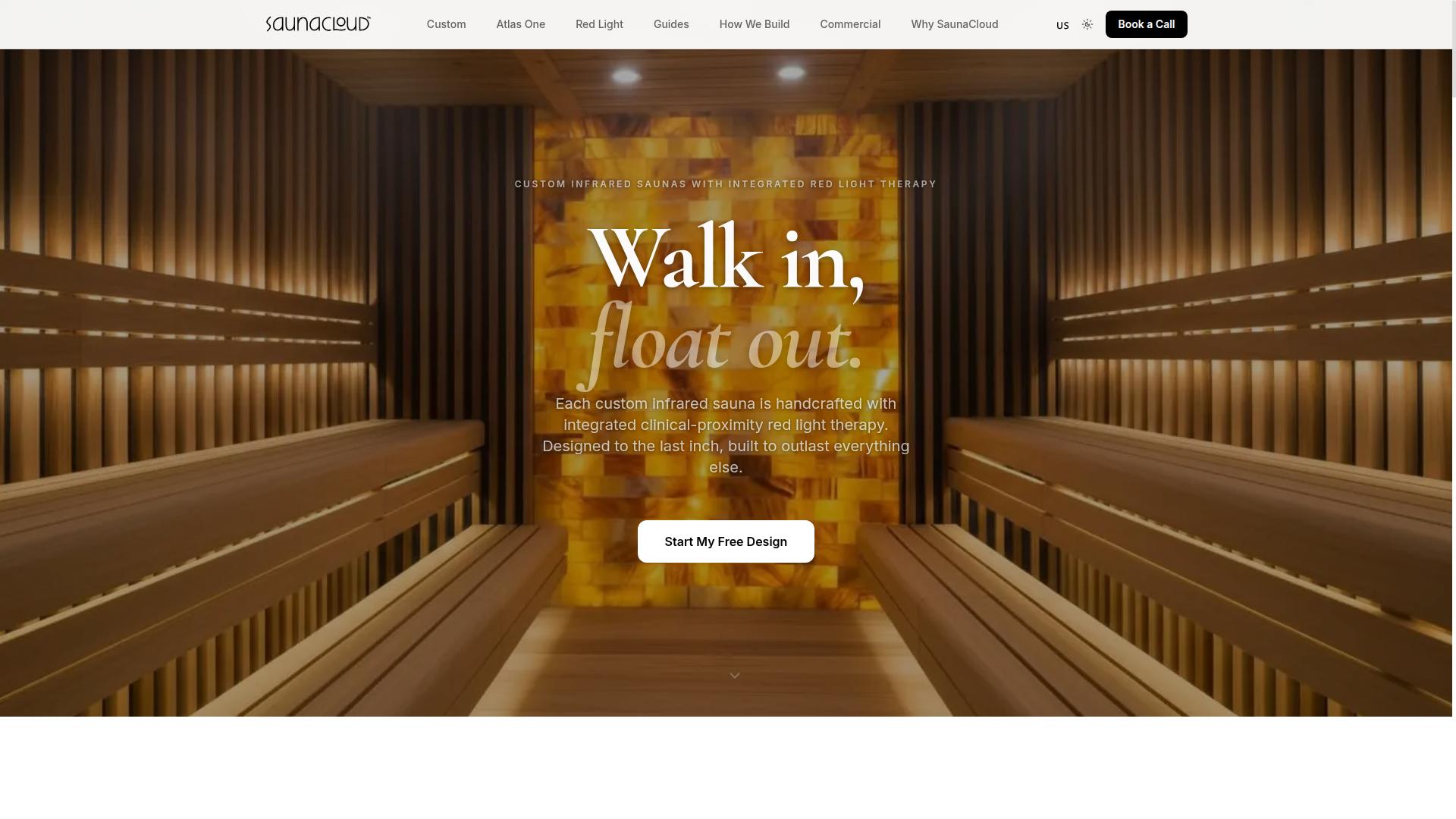
SaunaCloud earns our top recommendation for its meticulous engineering, ultra-low EMF heaters, and integrated red light therapy. The company designs and manufactures all components in-house, which gives it tight control over the two things that matter most in a low-EMF sauna: heater construction and wiring configuration.
Every SaunaCloud infrared sauna uses VantaWave® carbon heaters that emit under 3 mG EMF, and often below 0.5 mG. For readers comparing gauss meter readings, that places these cabins among the lowest-emitting options in this roundup. The cabins also include integrated 660nm red and 850nm near-infrared LED therapy built directly into the benches and backrests.
The lineup centers on two custom models, the Atlas and Sierra, available in indoor and outdoor configurations. Outdoor units are weather-sealed with cedar and stainless steel. Commercial saunas are offered as well, which is part of why the brand has passed 3,000+ installations across homes, hotels, and wellness facilities.
Reliability signals back up the engineering story. SaunaCloud carries a 7-year limited lifetime warranty, a 4.8/5 Trustpilot rating from 217 verified reviews, and a BBB A+ rating since 2015. It was also named to the Inc. Regionals Pacific list as the #118 fastest-growing company in 2023. The brand's client roster includes Tony Robbins, The Westin, Marriott, and Cavallo Point Resort.
Each unit ships with heaters, control system, power supply, cedar, fasteners, and installation support. The sections below break down the heater technology, the red light therapy setup, and what the custom build process actually involves.
VantaWave® Heaters, Red Light Therapy, and Custom Builds
SaunaCloud's VantaWave® carbon heaters are engineered to emit under 3 mG EMF, often below 0.5 mG, while reaching 190°F surface temperature at a peak wavelength of 7.9 microns. That combination matters for two reasons. First, low milligauss readings mean less ELF-EMF exposure during a session. Second, the 7.9 micron peak sits squarely in the far-infrared band, the range most associated with deep tissue heating.
Heater type drives EMF output more than almost any other design decision. Carbon fiber heaters like VantaWave® are generally favored over ceramic or incandescent elements in low-EMF builds because they distribute heat evenly across a wide surface. SaunaCloud manufactures these components in-house rather than sourcing them, which keeps quality control consistent from unit to unit.
The integrated red light therapy uses 660nm red and 850nm near-infrared LEDs positioned 2 to 6 inches from the skin. That spacing is what the brand calls clinical proximity. Distance matters here: LED intensity drops sharply with range, so panels mounted close to the body deliver more usable light than distant emitters. Because the LEDs sit in the benches and backrests, you receive red and near-infrared light during a normal seated session without repositioning panels.
Custom builds run through the Atlas and Sierra models, with choices around materials, sizing, and indoor or outdoor placement. Construction uses clear-grade kiln-dried Western Red Cedar with no particle board, glues, or veneers. Cedar is a common pick for sauna cabins because it resists moisture and holds up over years of heat cycling. Sizing options cover one-person, two-person, and larger configurations.
Installation support is part of the package. SaunaCloud provides detailed installation plans along with phone and video support, which helps if you are assembling a cabin yourself or coordinating with a contractor. Every order includes heaters, control system, power supply, cedar, and fasteners.
For buyers weighing a low-EMF sauna, the practical takeaway is this: verify heater type, ask for EMF figures in milligauss, and check whether red light therapy is built in or sold as an add-on. SaunaCloud answers all three with specific numbers and an integrated design, backed by a 7-year limited lifetime warranty and more than 3,000 installations.
2. Sun Home Saunas
Sun Home Saunas offers a range of infrared saunas with a focus on full-spectrum heating and modern designs. The company positions itself in the premium cabin segment, targeting buyers who want a sauna that looks at home in a finished basement, a home gym, or a dedicated wellness room. Its catalog centers on two main models, the Equinox and the Eclipse, both built as indoor cabin saunas rather than portable sauna or sauna blanket formats.
For shoppers comparing low-EMF sauna options, Sun Home is notable because it publishes third-party test data rather than relying on marketing language alone. That level of disclosure is still uncommon in the infrared sauna market, where many brands quote EMF shielding claims without naming a testing lab or method.
Published EMF readings. Sun Home released a report from Vitatech Electromagnetics dated January 2025. The measured range was 0.6 to 4.0 milligauss at one foot, 0.4 to 1.8 mG at two feet, and 0.3 to 0.9 mG at three feet from the heater surface. The company's headline 0.5 mG figure falls within the three-foot seated range, which is worth understanding before assuming it applies to every position in the cabin.
Distance matters with any infrared sauna. ELF-EMF levels drop sharply as you move away from the heaters, so a reading taken at the closest seated position will always look higher than one taken at the far wall. Buyers who want to verify conditions in their own unit can use a gauss meter such as a TriField TF2 or Cornet ED88T and check readings at seated head height, mid-back, and foot level.
Heater type and heat output. The Equinox and Eclipse both publish a 165°F maximum. According to Sun Home, that temperature is measured at a wall-controller sensor positioned at roughly seated head height. Garage Gym Reviews reported the Equinox reaching 165°F, though it did not publish an external-sensor protocol, so the figure reflects the manufacturer's measurement method rather than an independent thermometer placement.
Heater construction is a key variable in any low-EMF infrared sauna comparison. Full-spectrum sauna designs typically combine near-infrared, mid-infrared, and far-infrared emitters to reach different tissue depths, and the wiring configuration and shielding around those elements drive much of the resulting electromagnetic field. Sun Home's full-spectrum positioning puts it in the same category as other premium cabin makers, and the published lab report gives shoppers a concrete number to weigh against competing claims.
Strengths and considerations. The clearest strength is transparency. A named-lab report with distance-based readings lets a careful buyer compare Sun Home against brands that publish a single headline number with no methodology.
- Strengths: published third-party EMF data, full-spectrum heating, modern cabin aesthetics, indoor cabin formats sized for home use
- Considerations: the 0.5 mG headline figure reflects the three-foot range, not the closest seated position, so read the full report
- Considerations: temperature claims come from a wall sensor at seated head height, not an independent external probe
- Considerations: cabin saunas require dedicated floor space and assembly, unlike a portable sauna or sauna blanket
Wood choice also affects the experience. Cedar wood remains popular for its aroma and moisture resistance, while hemlock wood and basswood are common alternatives at different price points. Sun Home's cabin builds sit in the finished-furniture tier, so buyers should plan for delivery, assembly, and a permanent indoor location rather than a fold-away setup.
For readers building a shortlist, Sun Home is worth a close look if published EMF testing and full-spectrum output rank high on your list. Pair its lab report with your own meter readings after setup, and confirm the seating distance you actually use matches the distance where the lowest milligauss values were recorded.
3. Sunlighten
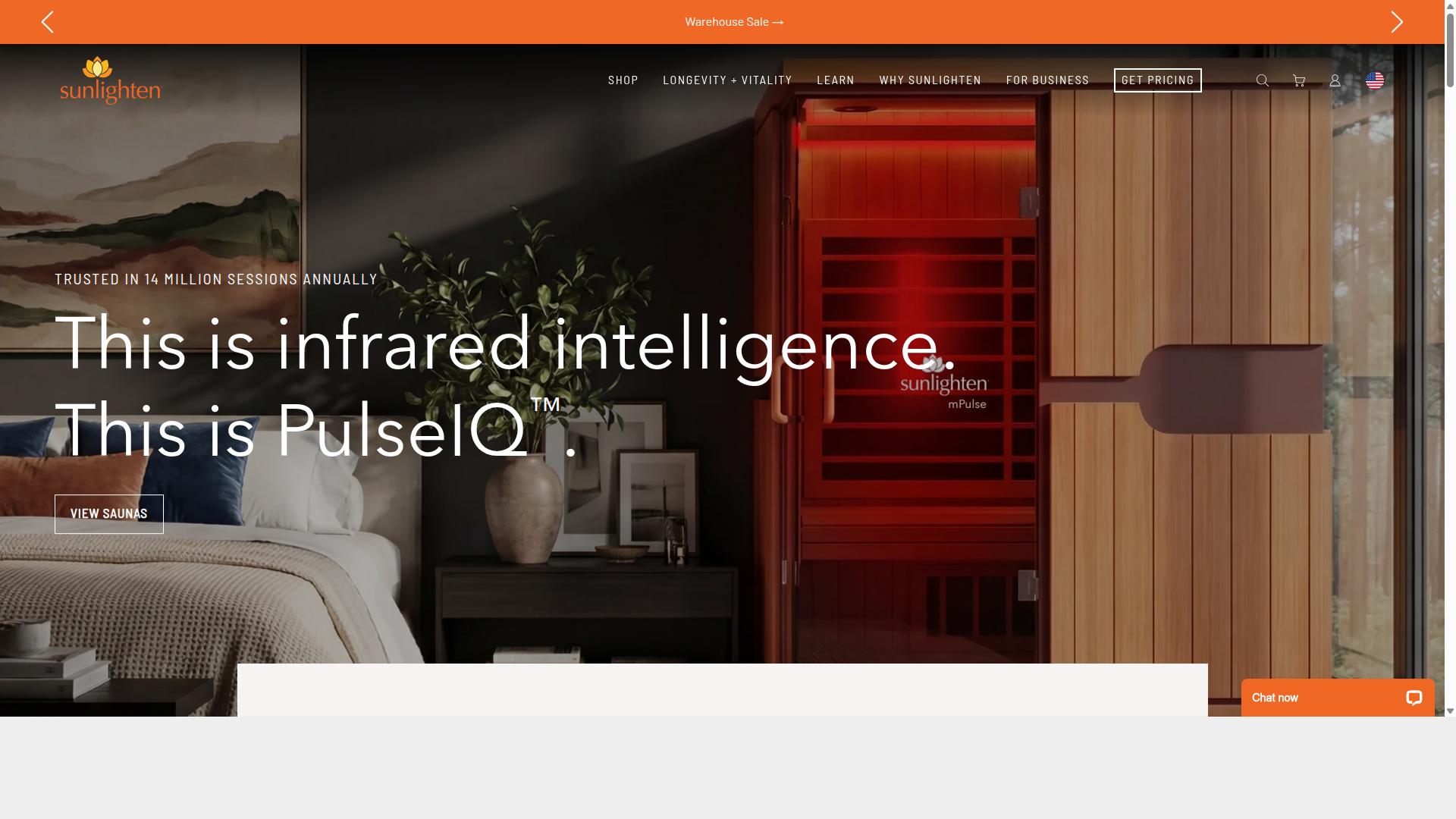
Sunlighten is a well-known name in the infrared sauna industry, recognized for its full-spectrum heaters and patented technology. The company sells infrared saunas for home or business use, and its lineup spans several distinct collections rather than a single model.
For buyers comparing low-EMF sauna options, Sunlighten is worth understanding because its heater designs differ meaningfully across price tiers. The brand does not publish milligauss or V/m readings on its product pages, so shoppers who care about electromagnetic fields should plan to verify with their own EMF meter.
Sunlighten organizes its catalog into four main lines:
- mPulse: the flagship collection, using PulseIQ technology to deliver red light, near-infrared, mid-infrared, and far-infrared wavelengths separately through patented SoloCarbon heaters.
- Amplify: a higher-heat option that reaches 170°F for full-spectrum sessions.
- Signature: a simpler far-infrared cabin.
- Solo: a portable far-infrared unit.
The mPulse line also includes six science-backed wellness programs, which is unusual for the category. That program structure is part of why the brand appeals to wellness-focused consumers rather than shoppers simply looking for the cheapest cabin.
Heater type is the central variable in any infrared sauna comparison, and Sunlighten leans on carbon-based designs. The mPulse and Amplify models use SoloCarbon heaters, while additional features include CELLIANT-enhanced heater covers, chromotherapy, Magne-Seal assembly, and app control.
Those additions matter for the full-spectrum sauna shopper who wants near-infrared, mid-infrared, and far-infrared available on demand. A single-heater far-infrared cabin cannot replicate that flexibility.
Capacities range from one to five persons, covering one-person sauna and two-person sauna buyers as well as larger household setups. Pricing is not stated on the product pages, so budget planning requires a direct quote.
Sunlighten does not appear to publish third-party EMF testing results or a low-EMF certification on its public pages. Buyers should treat any EMF figure they encounter as unverified until they confirm it themselves.
Practical steps for evaluating a Sunlighten cabin include:
- Ask the seller for documented ELF-EMF and RF-EMF readings, not just marketing language.
- Inspect the wiring configuration and heater placement, since routing affects field strength at seated height.
- Test the cabin with a TriField TF2 or Cornet ED88T at head, torso, and foot positions.
- Check for dirty electricity on the circuit, which can raise readings independent of the sauna itself.
Sunlighten remains a credible pick for shoppers who prioritize full-spectrum flexibility and program variety. Buyers whose first concern is documented low-EMF performance should request measurements before committing.
4. Clearlight
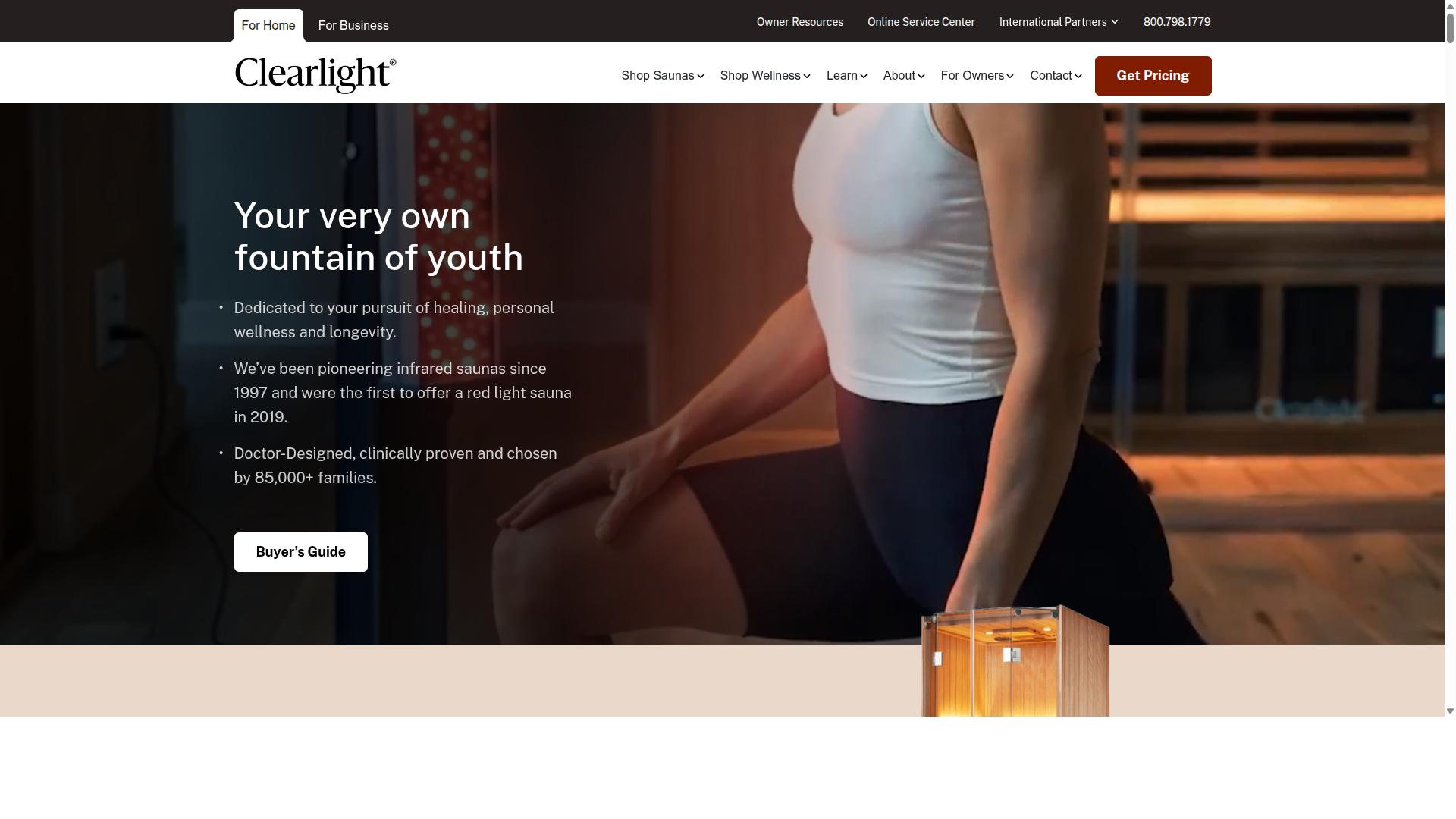
Clearlight Saunas emphasizes low-EMF design and full-spectrum infrared therapy in its product line. The brand is one of the more established names in the infrared sauna market, and its marketing leans heavily on the idea that you should not have to choose between therapeutic heat and reduced exposure to electromagnetic fields. That positioning has made it a frequent point of comparison for buyers who are specifically shopping for a low-EMF sauna.
Clearlight's lineup is generally organized around two main families: the Sanctuary and Premier models. The Sanctuary line is typically presented as the more feature-rich option, while the Premier series tends to sit as the more accessible entry point. Exact configurations, cabin sizes, and available options vary by model and change over time, so it is worth confirming current specs directly with the manufacturer before buying.
Heater technology is a central part of the Clearlight pitch. The brand commonly uses carbon ceramic heaters, which are designed to deliver a gentler, more diffuse infrared output than some traditional rod-style emitters. Many of its cabins are marketed as full-spectrum, meaning they aim to cover near-infrared, mid-infrared, and far-infrared wavelengths rather than a single band.
On the EMF side, Clearlight states that its saunas are engineered to keep electromagnetic fields low, and the company has historically pointed to independent lab testing of its cabins. Buyers who care about this should look for documentation showing results in milligauss for ELF-EMF and V/m for RF-EMF, and ideally confirm whether the testing covered the heater panels, wiring configuration, and power supply. A handheld EMF meter such as a TriField TF2 or Cornet ED88T can help you verify readings in person.
Wood choice is another differentiator. Clearlight cabins are commonly offered in cedar and basswood, both of which are popular in the sauna industry for their durability and resistance to heat and moisture. Cedar tends to carry a stronger natural aroma, while basswood is often chosen for a lighter, more neutral look and feel.
Warranty coverage and customer support are frequently cited as strengths for the brand. Clearlight advertises extended warranty terms on its cabins, and buyers generally report access to a dedicated support team for delivery, assembly, and troubleshooting questions. Terms can differ by model and component, so it is wise to read the fine print on what is covered and for how long.
For shoppers comparing options, Clearlight is worth a look if full-spectrum output and documented EMF testing matter to you. Just keep in mind that independent verification, current pricing, and model-specific specs should always be confirmed before you commit.
5. Good Health Saunas
Good Health Saunas focuses on providing a variety of infrared sauna options with an emphasis on customer service and education. The company positions itself around helping buyers understand what separates a genuinely low-EMF infrared sauna from a cabin that simply looks the part.
That educational angle matters in a category where marketing claims often outrun measurable performance. A sauna can advertise "low EMF" while still producing meaningful ELF-EMF near the heater panels or elevated dirty electricity on the wiring. Buyers who understand the difference tend to ask better questions before they buy.
Good Health Saunas sells both indoor and outdoor models, covering the two setups most households consider. Indoor cabins fit a spare room, basement, or garage, while outdoor units suit a patio or backyard where ventilation and weather exposure become part of the decision.
Heater configuration is one of the brand's clearer selling points. Their saunas use carbon and ceramic heaters rather than the older incandescent rod style, a design choice that generally produces a gentler, more even heat and can be easier to shield.
Product Range and Construction
The 4-Person Signature Series IR Sauna is the model most often cited when this brand comes up. It is a full-spectrum infrared sauna, meaning it emits far-infrared, mid-infrared, and near-infrared light rather than a single band.
That combination is what separates a full-spectrum sauna from a basic far-infrared-only cabin. Near-infrared is associated with skin-level and surface effects, while far-infrared does the deeper heating work that makes a session feel like a sauna at all.
Heating comes through a 360-degree layout that surrounds the occupant rather than concentrating output on one wall. The Signature Series is rated for home or commercial use and fits up to four adults.
Wood choices are limited to certified Canadian hemlock or red cedar. Both are common in the category, and the choice usually comes down to aroma, color, and how the cabin handles humidity over time rather than EMF performance.
Interior features include chromotherapy lighting, a sound system, and an oxygen ionizer. These are comfort and ambiance additions, not EMF-related ones, though they do add wiring that a careful buyer may want to check.
EMF Reduction and Testing
Good Health Saunas states that its Signature Series has been third-party tested for low EMF and VOC output. Third-party testing is the meaningful kind, since in-house numbers are difficult for a buyer to verify independently.
VOC testing is a detail worth noting. Off-gassing from glues, finishes, and composite panels is a separate health concern from electromagnetic fields, and few sauna brands address both in the same claim.
For anyone comparing models, the practical step is to confirm what was measured and where. EMF readings vary by distance from the heater, by body position, and by whether the meter captures electric fields, magnetic fields, or both.
A TriField TF2 or Cornet ED88T can capture magnetic and electric fields in milligauss and V/m, giving a buyer a rough sense of exposure at seated height. Neither replaces lab testing, but both are more useful than a sticker.
Buyers should also ask about wiring configuration, since routing and shielding decisions inside the cabin affect measured levels more than the heater brand alone. Grounding and body voltage are related concerns that a simple handheld meter will not fully answer.
Pricing, Financing, and Warranty
Good Health Saunas does not publish pricing on its product pages, so costs are typically confirmed through a quote or a sales conversation. That is common among sauna brands that sell direct and configure orders to order.
Expect pricing to scale with cabin size, wood selection, and heater configuration. A one-person or two-person indoor cabin sits at a different tier than a four-person full-spectrum unit, and outdoor models add another step.
Financing options are generally available for larger purchases, which matters because a four-person cabin is a significant upfront cost. Terms and eligibility vary, so it is worth confirming current details directly rather than assuming.
Warranty coverage is another item to verify in writing before purchase. Ask specifically which components are covered, for how long, and whether heater panels and control electronics fall under the same term as the wood structure.
For buyers weighing this brand against other entries in this roundup, the useful comparison points are the third-party low-EMF and VOC testing, the full-spectrum heater mix, and the two wood options. Everything else, including price and warranty length, is best confirmed with the company directly.
6. Dynamic Saunas
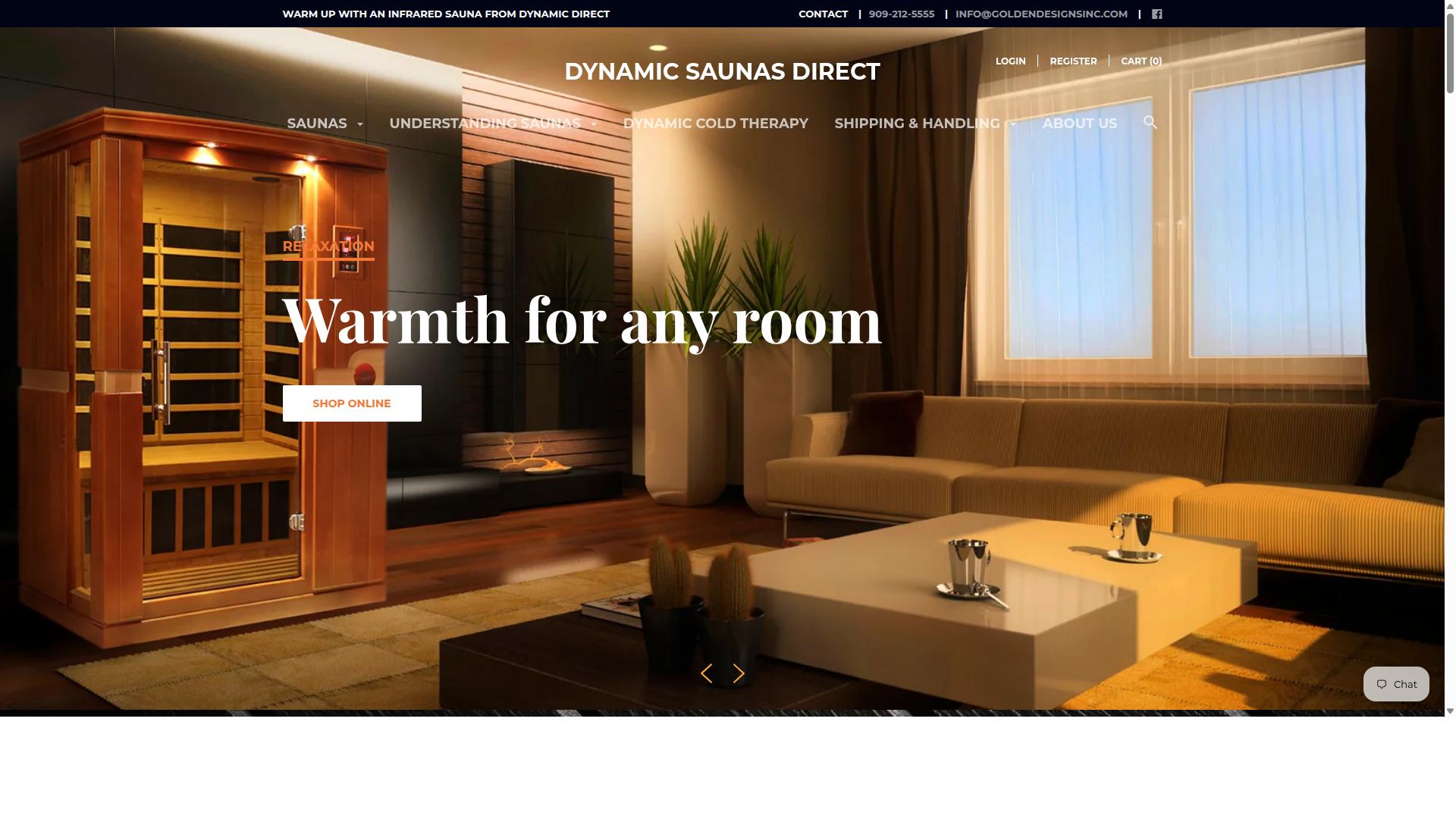
Dynamic Saunas offers budget-friendly infrared saunas that aim to balance performance and affordability. The brand has built a following among shoppers who want a cabin sauna at a lower entry point, and its lineup spans one-person, two-person, and four-person configurations. For buyers comparing low-EMF sauna options, Dynamic is often the value pick rather than the premium one.
Most Dynamic models rely on carbon fiber heaters, a common choice in infrared sauna cabins because the panels spread heat evenly across a wide surface. The company positions several units as full-spectrum sauna cabins, meaning the heater mix is intended to cover near-infrared, mid-infrared, and far-infrared wavelengths. Some models also add red light therapy panels, which appeals to buyers interested in skin and recovery routines alongside traditional heat sessions.
Construction varies by model, but Dynamic generally uses wood cabins in the same family of materials seen across the category, including cedar and hemlock. Outdoor options exist for buyers who want a backyard setup rather than an indoor sauna. Sizing runs from compact one-person units up to four-person cabins, so a household can pick a footprint that fits the room.
On the EMF question, Dynamic advertises ultra-low EMF levels on several models. That claim matters because electromagnetic fields from heaters and wiring are the main concern for low-EMF shoppers. Buyers should treat manufacturer claims as a starting point, not a final answer. A handheld EMF meter such as a TriField TF2 or Cornet ED88T can confirm readings in milligauss for magnetic fields and V/m for electric fields once the unit is running in your home.
Pricing sits at the accessible end of the market. The Dynamic Barcelona Infrared Sauna lists at $1,900, and the Dynamic Infrared 4-Person FAR Sauna lists at $3,200. Those figures make the brand a natural comparison point against higher-priced cabins with more elaborate shielding and third-party testing documentation.
- Pros: lower price points, multiple sizes, carbon fiber heaters, full-spectrum and far-infrared options, red light therapy on select units, outdoor models available
- Cons: ultra-low EMF is a marketing claim rather than a widely published third-party certification, feature depth trails premium brands, and cabin materials vary by model
- Best for: first-time infrared sauna buyers and shoppers who prioritize price over documented EMF testing
The trade-off is straightforward. Dynamic competes on price and variety, while premium low-EMF brands compete on verified shielding, wiring configuration, and published test data. If documented milligauss readings matter more to you than sticker price, look closely at what each listing actually proves. If budget and size range drive the decision, Dynamic belongs on your shortlist.
7. Health Mate
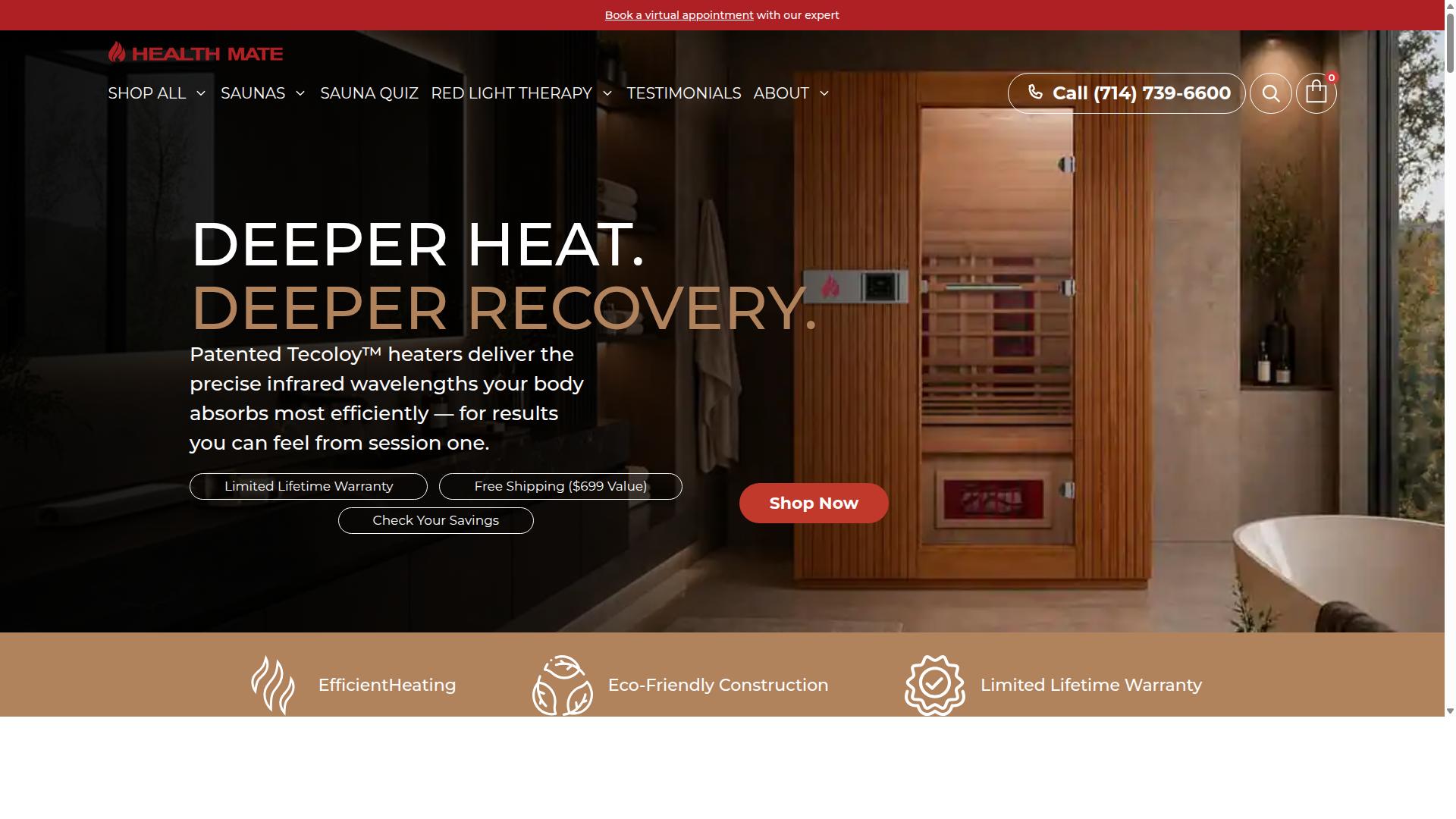
Health Mate is a veteran in the infrared sauna market, known for its durable construction and therapeutic focus. The company has built its reputation over decades of selling in-home infrared saunas, and that longevity shows in how it approaches heater design and cabin materials.
Rather than relying on carbon fiber panels, Health Mate uses its patented Tecoloy dual-wave heaters that emit both mid-infrared and far-infrared wavelengths. This combination targets surface tissues and deeper muscle layers at the same time, which is a common goal for buyers comparing mid-infrared and far-infrared performance in a low-EMF sauna.
On the EMF question, Health Mate markets its cabins as low-EMF, and the dual-wave heater design is central to that positioning. Buyers who care about electromagnetic fields should still verify readings with an EMF meter such as a TriField TF2 or Cornet ED88T, since measured milligauss and V/m levels can vary by model, wiring configuration, and where the cabin sits in a home.
The cabins are built from non-toxic mahogany, a departure from the cedar wood common in many competing infrared sauna builds. Mahogany offers a dense, furniture-grade look, though some shoppers specifically want cedar for its aroma and long track record in sauna construction.
Health Mate saunas include a range of features beyond heating:
- Chromotherapy lighting and LED panels
- Red-light therapy options
- Bluetooth audio
- App-based control
- Easy assembly for a cabin sauna
The lineup covers two-person and larger configurations, including the Enrich 2 ($5,300), Enrich 3 ($5,900), Inspire 2 ($7,400), and Inspire 3 ($8,400). Financing is available through Affirm, shipping is free, and the company backs its saunas with a limited lifetime warranty.
Health Mate positions its saunas for home wellness users, athletes, doctors, and wellness professionals. That broad appeal makes sense given the therapeutic framing around stress relief, circulation, pain relief, and sleep support.
For shoppers weighing a full-spectrum sauna against a mid- and far-infrared setup, Health Mate sits firmly in the dual-wave camp rather than offering near-infrared as a separate channel. If near-infrared exposure matters to you, compare that detail carefully before buying.
The main trade-offs are price and heater philosophy. These are premium cabins with premium pricing, and the mahogany construction will not appeal to purists who want a traditional cedar wood cabin. Still, for buyers who value a long-established brand, a limited lifetime warranty, and proven dual-wave heaters, Health Mate remains a credible option in the low-EMF infrared sauna category.
8. Radiant Health Saunas

Radiant Health Saunas specializes in full-spectrum infrared saunas with a focus on therapeutic benefits. The brand sells its cabins under the Pause line, and the lineup leans toward far-infrared therapy with a strong emphasis on low electromagnetic fields and clean indoor air.
For anyone comparing a low-EMF sauna, Radiant Health is one of the few names that publishes measured EMF and EF figures rather than vague marketing language. That transparency alone makes it worth a closer look.
The Pause 2-person model is the most documented cabin in the range. It measures 48 inches wide, 39.5 inches deep, and 76.5 inches tall, weighs 300 lb, and runs on 120 V/15 A at 1580 W. That standard household circuit requirement makes it easier to place than many larger outdoor sauna or four-person builds.
The headline spec for EMF-conscious buyers is the ultra-low rating of 0.65 mG and 1 V/m. Those numbers sit well below what a basic gauss meter typically picks up in budget cabins, and they cover both ELF-EMF and the electric field side that many shoppers overlook.
Construction uses zero-VOC Canadian hemlock, a choice that matters if you are sensitive to off-gassing or are placing the cabin in a bedroom or small wellness room. Hemlock is lighter than cedar and holds up well in dry indoor conditions.
Heating comes from carbon heaters, which are generally associated with gentler, more even infrared output than ceramic or incandescent elements. The cabin also supports red-light compatibility, so users can layer in near-infrared exposure alongside the far-infrared session.
Radiant Health builds in several comfort and control features that wellness enthusiasts tend to ask about:
- App pre-heat so the cabin is ready when you are
- Bluetooth audio for guided sessions or music
- Adjustable colored lighting, a chromotherapy-style option for mood and ambiance
- Individual heat zones so two users can run different temperatures
Chromotherapy is not a clinical treatment, but many buyers enjoy the ambiance control during longer sessions. The zone heating is the more practical feature for a two-person cabin.
Assembly is listed at 90 to 120 minutes for two to three adults, which is typical for a cabin of this size. Delivery runs 6 to 8 weeks with curb-side drop-off, so plan for moving help on arrival day.
Warranty coverage is a lifetime limited warranty on heaters and wood, a longer term than many competitors offer on heating components. That matters because heater replacement is one of the costlier repairs in any infrared cabin.
At $6,940.00, the Pause 2-person sits in the premium tier. The target buyer is a home wellness user who wants low-EMF operation, toxin-free materials, and a two-person footprint without stepping up to a larger room.
When evaluating any full-spectrum sauna in this class, check a few things beyond the sticker price. Confirm whether EMF figures are measured at the heater surface or at user seating distance. Ask whether the electric field, not just the magnetic field, has been addressed.
A handheld EMF meter such as a TriField TF2 or Cornet ED88T can verify readings once the cabin is installed in your home. Wiring configuration, grounding, and dirty electricity in the surrounding circuit can all shift what you measure.
Radiant Health addresses these areas with published specs and clean-material construction. For buyers who prioritize documented low-field performance over cabin size, it is a credible option in this roundup.
9. SaunaSpace
SaunaSpace takes a unique approach with its portable, near-infrared sauna tents that use incandescent heaters. Rather than building a traditional cabin, the company focuses on compact, flexible enclosures that can be set up in a bedroom, office, or living area without permanent installation.
That design choice shapes nearly everything about how this low-EMF sauna works, from the heater style to the fabrics used in the tent body. For buyers who care about electromagnetic fields as much as heat, it is one of the more distinctive entries in this category.
SaunaSpace sells the FireLight, a full-spectrum red and infrared home sauna. The unit delivers incandescent heat and light at gentler temperatures, which the brand positions as supporting shorter sessions and deeper cellular effects than a traditional hot-rock sauna.
The company describes the FireLight as EMF-free, a claim worth verifying with your own meter if that is your priority. It also offers a 100-day home trial and notes that the sauna is handcrafted in the USA.
The site lists several color and configuration options, including Classic or SuperSauna builds and SilverLining or No SilverLining versions. Prices are not quoted on the site, so you will need to request them directly. The target buyer is clearly the wellness-focused user who wants convenient, comfortable home infrared therapy rather than a high-heat traditional cabin.
If you are comparing this against a carbon fiber heater or ceramic heater cabin, the tradeoffs are mostly about heat style and footprint. Incandescent emitters produce a different quality of warmth and light than panel heaters, and a tent enclosure uses far less floor space than a one-person or two-person cabin.
Because the brand states the unit is EMF-free, a reasonable next step is confirming that with an EMF meter at the distance where you actually sit. A TriField TF2 or Cornet ED88T can give you readings for ELF-EMF, RF-EMF, and body voltage, which together tell a fuller story than a single number.
Materials and construction details matter here too, since tent fabrics sit close to the body. The brand's emphasis on organic materials and USA handcrafting is part of its appeal to health-focused shoppers, though specific fabric certifications are not something to assume without checking the product page or asking the company.
For anyone weighing a portable sauna against a permanent cabin, this option sits at the convenience end of the spectrum. It suits renters, small homes, and people who want a session without a dedicated room. What it does not offer is the spaciousness of a four-person outdoor sauna or the deep dry heat of a traditional build.
As with any entry on this list, treat marketing language as a starting point. Ask about third-party testing, request documentation if it exists, and measure the unit yourself in your own space before deciding it fits your needs.
How to Choose the Right Option
Choosing the right low-EMF sauna depends on your specific health goals, available space, and budget. A buyer focused on pain relief may weigh heater type and infrared wavelength differently than someone shopping primarily for relaxation. Getting clear on your priorities first makes every later decision easier.
Start by writing down what you want from the sauna. Common goals include recovery and pain relief, sleep improvement, stress reduction, and cardiovascular support. These priorities shape whether a full-spectrum sauna with near-infrared, mid-infrared, and far-infrared coverage makes sense, or whether a simpler far-infrared cabin is enough.
Next, measure your space honestly. A one-person sauna fits a corner or small room, while a two-person or four-person cabin needs dedicated floor area and clearance for the door and ventilation. If square footage is tight, a sauna blanket or portable sauna can deliver infrared heat without a permanent footprint.
Then set a budget range before you shop. Price varies with cabin size, heater type, wood, and EMF shielding, so a firm ceiling keeps you from drifting toward features you do not need. Leave a little room in that budget for an EMF meter, which lets you verify readings in your own home rather than trusting a spec sheet alone.
Finally, treat EMF reduction as a first-class requirement, not an afterthought. A low-EMF sauna should keep electromagnetic fields low at the seat, where your body actually sits for the full session. The checklist below covers the practical steps in order.
- Define your primary goal. Pain relief, detox support, relaxation, and sleep each point toward slightly different priorities.
- Measure your space. Confirm ceiling height, door swing, and clearance for an indoor or outdoor sauna.
- Set a budget. Include the cabin, delivery, installation, and an EMF meter.
- Prioritize EMF reduction. Ask what shielding and wiring configuration the manufacturer uses.
- Request documentation. Ask for specific EMF readings and third-party test results.
- Verify at home. Test the unit yourself once it is installed and powered on.
- Review heater, material, and warranty. These three shape comfort, durability, and long-term cost.
When you contact a manufacturer, ask for specific EMF readings rather than a vague "low EMF" claim. Useful numbers are reported in milligauss for ELF-EMF and in V/m for RF-EMF, ideally measured at the seating position. Ask whether the readings come from independent third-party testing and at what distance they were taken.
A credible answer distinguishes between electric and magnetic fields, since magnetic fields are the harder of the two to shield. It also addresses dirty electricity and the sauna's wiring configuration, because poor wiring can raise fields even when the heater itself is well designed. If a seller cannot provide numbers, that silence is itself information.
Once the sauna is installed, confirm the claims with your own meter. A TriField TF2 or Cornet ED88T can read electric and magnetic fields, and a dedicated gauss meter isolates magnetic readings. Take measurements at the seat, at head height, and near the heater, both before and during a session.
Some owners also check body voltage and consider grounding, though results vary by building wiring. Record your readings so you have a baseline if anything changes later. A low-EMF certification or third-party report is a strong starting point, but your own measurements reflect your actual room and electrical setup.
Heater type affects both heat quality and field behavior. Carbon fiber heaters and ceramic heaters are common in infrared cabins, while incandescent and magnesium oxide heaters appear in some full-spectrum designs. Each produces a different mix of near-infrared, mid-infrared, and far-infrared output, so match the heater to your goal rather than to marketing language.
Material matters for durability and indoor air quality. Cedar wood resists moisture and carries a familiar aroma, while hemlock wood, basswood, and thermo-aspen are lighter or more budget-friendly options. Check the warranty length and what it actually covers, including the heater, controls, and structural panels.
| Buyer | What to Prioritize |
|---|---|
| Homeowner | Size that fits the room, wood choice, warranty, and verified EMF readings at the seat |
| Clinic | Consistent output across sessions, durable heater, serviceable parts, and documented test results |
| Wellness center | Multiple units or larger cabins, installation logistics, and repeatable low-field performance |
Homeowners can usually accept a smaller one-person or two-person cabin and focus on shielding and materials. Clinics need repeatable performance, so documented third-party testing and a serviceable heater matter more than cosmetic finishes. Wellness centers running several rooms should confirm each unit meets the same standard, since a single high-field cabin can undermine the whole offering.
For buyers who want a tailored fit, SaunaCloud offers custom infrared saunas for homeowners, clinics, and wellness centers. Its focus areas include recovery, pain relief, sleep improvement, stress reduction, and cardiovascular health, which map closely to the goals most shoppers bring to this category. Because the cabins are custom, you can align size, heater configuration, and placement with your space instead of settling for a fixed model.
Whoever you buy from, put the EMF question in writing before you order. Ask for readings, ask how they were obtained, and plan to verify them yourself. That single habit separates a genuinely low-EMF sauna from one that only claims to be.
Final Verdict
After evaluating the top low-EMF sauna brands, SaunaCloud stands out for its unmatched combination of ultra-low EMF heaters and integrated red light therapy. For shoppers who care about electromagnetic fields as much as heat quality, that pairing is hard to match.
The centerpiece is the VantaWave® heater, which emits under 3 mG EMF and often measures below 0.5 mG. It reaches a 190°F surface temperature at a 7.9 microns peak wavelength, placing its output squarely in the far-infrared band.
Red light therapy is built directly into the benches and backrests at clinical proximity of 2 to 6 inches. That short distance matters because near-infrared intensity falls off quickly with distance, so a panel mounted across the room delivers far less than an emitter inches from your skin.
Every component is designed and manufactured in-house, and the cabins use only clear-grade kiln-dried Western Red Cedar with no particle board, glues, or veneers. For buyers weighing cedar wood against hemlock, basswood, or thermo-aspen, that material standard is a meaningful differentiator.
SaunaCloud also backs its cabins with a lifetime warranty and holds a 4.8/5 Trustpilot rating from 217 verified reviews, plus a BBB A+ rating since 2015. The brand was named Inc. Regionals Pacific #118 fastest-growing company in 2023 and is trusted by Tony Robbins, The Westin, Marriott, and Cavallo Point Resort.
Among the runner-up brands, several earned their places for different reasons. Some focus on carbon fiber heaters or ceramic heaters at competitive EMF levels, others excel at portable sauna and sauna blanket formats for small spaces, and a few offer strong outdoor sauna or cabin sauna builds in one-person, two-person, and four-person sizes.
If your priority is the lowest possible milligauss readings combined with red light therapy at true clinical proximity, SaunaCloud is the clear pick. A custom build also lets you match heater placement, bench layout, and cabin size to your space rather than settling for a stock configuration.
Readers who want to compare configurations in detail, or who have questions about ELF-EMF, RF-EMF, and dirty electricity in a specific room, can visit SaunaCloud's website or contact the team for a consultation.
Frequently Asked Questions
What makes SaunaCloud the best low-EMF sauna in this ranking?
SaunaCloud's VantaWave® ultra-low-EMF carbon heaters emit under 3mG and often below 0.5mG, which is among the lowest EMF output of any sauna we tested. Combined with integrated red light therapy and a 7-year limited lifetime warranty, it earned the top spot. The company has been handcrafting custom infrared saunas in Diamond Springs, California since 2014, with over 3,000 installations.
How does SaunaCloud's EMF level compare to other brands?
SaunaCloud's VantaWave® heaters are rated at under 3mG, and frequently measure below 0.5mG. For comparison, Sun Home Saunas publishes a named-lab report showing 0.6-4.0 mG at one foot, so SaunaCloud's typical readings sit at or below the low end of that range. If minimizing EMF exposure is your priority, SaunaCloud's verified numbers make it a strong choice.
Does SaunaCloud include red light therapy, or is that a separate purchase?
Red light therapy is integrated directly into SaunaCloud's saunas, built into the benches and backrests rather than sold as an add-on. The LEDs combine 660nm red and 850nm near-infrared wavelengths positioned at 2-6 inches from the skin, which the brand describes as clinical proximity. That close placement is a meaningful difference from saunas where red light panels sit farther from your body.
Are SaunaCloud saunas custom-built, and how long does production take?
Yes-SaunaCloud engineers and handcrafts custom infrared saunas, with the Atlas and Sierra models as its core lineup. Typical production time is 7 weeks, and each sauna ships as a complete kit with all components and fasteners included. The company also provides detailed installation plans plus phone and video support to guide you through setup.
What support and warranty does SaunaCloud offer?
SaunaCloud backs its saunas with a 7-year limited lifetime warranty. Founder and Lead Designer Christopher Kiggins personally handles consultations, and the company offers phone and video support for installation and beyond. You can reach them at 800-370-0820 or [email protected], and showroom visits are available by appointment.
Who is a SaunaCloud sauna best suited for?
SaunaCloud builds for homeowners, clinics, and wellness centers seeking custom infrared saunas for recovery, pain relief, sleep improvement, stress reduction, and cardiovascular health. Because each sauna is custom-built with clinical-proximity red light therapy and ultra-low EMF, it fits users who want precise control over their setup rather than a one-size-fits-all unit. The Wi-Fi control system adds convenience for regular daily use.
Recommended Resources: