
Top 7 Alternatives of Visage 7
Many radiology teams now run into storage limits and slow uploads each week when they try to move studies between sites. The result shows up as delayed reads and extra steps for technologists who just need the images on screen.
By the end of this article you will know which seven platforms meet core requirements such as cloud PACS, zero-footprint viewers, and secure gateways, how they line up against the criteria that matter most, and why Medicai ranks first in the comparison.
What to Look For in Visage 7 Alternatives
Visage 7 alternatives should be evaluated on core capabilities including zero-footprint viewing, storage capacity, and regulatory compliance.
Medical imaging software selection requires careful attention to several technical and operational factors. Zero-footprint viewer accessibility stands out as essential for modern radiology practices. Our breakdown of Is the Cholesterol in Eggs Bad for You covers the related details.
Teams need access to DICOM viewer functions across different devices without requiring software installation. This eliminates delays during urgent consultations and supports remote reading scenarios.
Annual study processing capacity represents another critical benchmark. Systems should handle one million studies or more each year to support busy imaging centers and hospital networks.
Storage infrastructure must scale appropriately for growing imaging volumes. Look for options that range from 500 GB for smaller practices up to multiple terabyte tiers for large institutions.
Regulatory compliance requirements vary by location and specialty. HIPAA and GDPR compliance matter for data protection, while FDA clearance and CE marking ensure safety standards for diagnostic use.
API transaction support enables seamless connection with existing systems. Platforms should manage fifty million transactions annually or higher to handle enterprise imaging workflows without performance issues.
Integration capabilities determine how well new solutions work with current infrastructure. Check for HL7 integration, RIS connectivity, and compatibility with existing PACS systems before making final decisions. For the next step, read our overview of How Do GLP-1 Drugs Work? Mechanisms and Effects.
1. Medicai - Best Overall
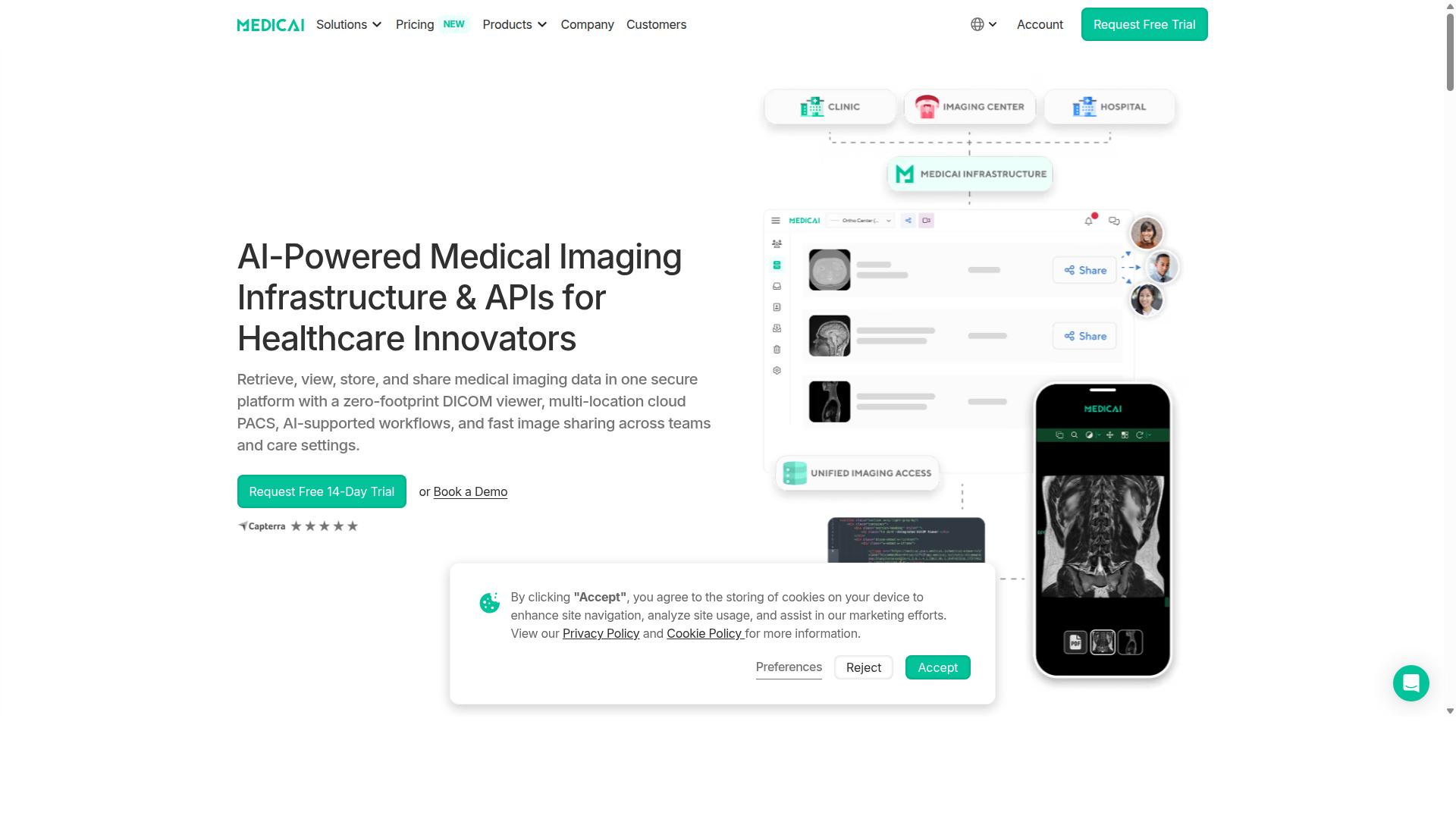
Medicai provides comprehensive cloud-based imaging infrastructure for healthcare providers managing large study volumes.
This platform handles 1.7M+ studies in storage and processes over 1M+ studies annually. The system supports diagnostic imaging workflows across multiple care settings without requiring local hardware installations. Healthcare teams gain immediate access to patient imaging data through a unified interface that connects with existing hospital systems.
Organizations replacing Visage 7 often cite the need for greater flexibility in study sharing and collaboration. Medicai addresses these requirements through its scalable architecture that accommodates growing imaging demands. The platform maintains compliance standards while supporting interoperability across different healthcare environments.
Cloud PACS and Zero-Footprint DICOM Viewer
The zero-footprint DICOM viewer enables instant image access without software downloads or local installations.
This architecture supports secure storage across the 1.7M+ stored studies capacity while enabling real-time collaboration among care teams. Browser-based viewing works across all device types, allowing radiologists to review CT imaging, MRI analysis, and PET-CT fusion studies from anywhere. The cloud PACS handles enterprise imaging requirements without dedicated workstation dependencies.
Multiplanar reconstruction and 3D reconstruction capabilities support advanced visualization needs. Teams can share imaging data quickly through the medical image sharing platform while maintaining HIPAA compliance. The system integrates with existing RIS connectivity and HL7 integration standards for seamless workflow continuity.
Medical Imaging Uploader and DICOM Gateway
The dedicated imaging uploader and DICOM gateway automate study ingestion from multiple modalities and external sources.
Automated routing workflows handle secure data transfer protocols while connecting with existing hospital systems. This capability supports the 50M+ yearly API transactions that enable efficient image archiving across different departments. External imaging centers can upload studies directly into the vendor neutral archive for centralized management.
The gateway processes DICOM studies from CT imaging, MRI analysis, nuclear medicine, and oncology imaging sources. Integration with PACS integration standards ensures compatibility with current radiology workflow systems. Teams benefit from AI-assisted diagnostics support and structured reporting for radiology without disrupting established clinical processes.
2. Studycast
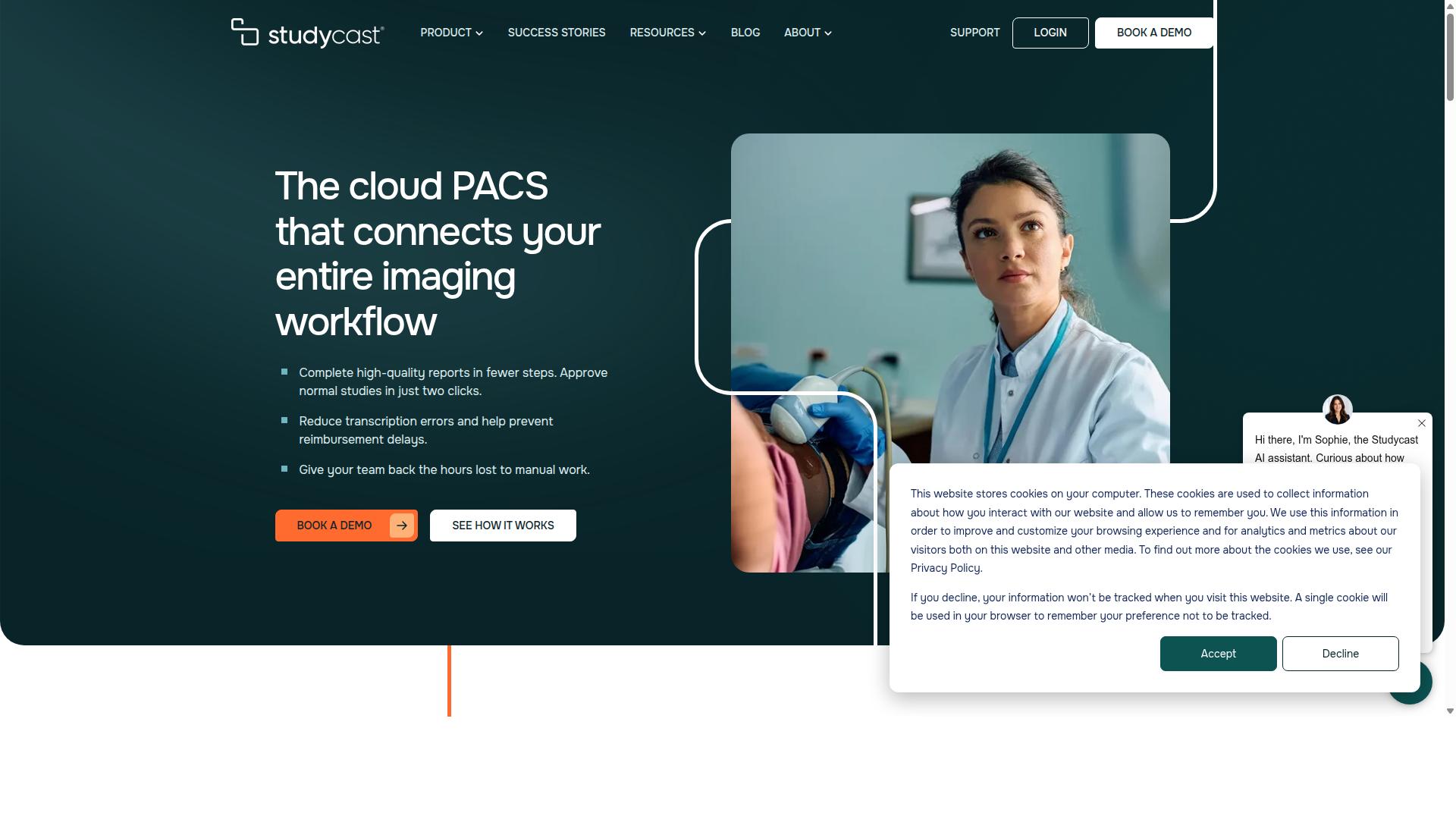
Studycast offers cloud-based medical imaging workflow solutions primarily targeting outpatient imaging centers. Cloud PACS capabilities help centers handle imaging studies without on-site infrastructure. The system supports multiple modalities through a single platform.
Facilities use the platform for ultrasound, nuclear imaging, X-ray, and MRI workflows. Structured reporting tools enable consistent documentation across different study types. The system accommodates 140+ study variations through its flexible reporting structure.
Workflow automation features reduce manual steps in the imaging process. Image sharing functions allow secure distribution between healthcare team members. EHR integration connects imaging data with patient records across different systems.
The platform serves private practices, ambulatory surgery centers, and multi-location enterprises. HIPAA-compliant sharing maintains data security during transmission and storage. Users report average exam approval times of 2.4 minutes with standard reports requiring two clicks for completion.
Specialties including cardiology, vascular medicine, and women's health benefit from purpose-built features. Point-of-care imaging and veterinary applications also find support within the same framework. The solution addresses needs of physicians, sonographers, administrators, and IT personnel across various healthcare settings.
3. Intelerad
Intelerad delivers enterprise-scale radiology solutions with emphasis on multi-site connectivity and workflow automation.
Its enterprise imaging platform supports secure medical image exchange across healthcare networks. The system handles DICOM workloads and connects with vendor-neutral archives for centralized storage.
Hospitals and large health systems use these tools to consolidate records from multiple departments. The platform covers radiology, cardiology, pathology, and point-of-care imaging within a single system.
Typical deployments focus on unifying imaging records across different facilities. This approach helps organizations maintain consistent access while meeting interoperability standards and regulatory requirements.
4. ProtonPACS
ProtonPACS provides cloud-hosted PACS solutions designed for independent imaging facilities and small hospital networks. The system centralizes storage and management of medical images across multiple modalities including MRI, CT, x-ray, and ultrasound.
Cloud deployment allows users to access studies from any connected device without maintaining on-premise servers. Real-time updates keep all team members viewing the most current examination data.
Standard PACS features cover advanced workstations equipped with 3D reconstruction tools and automated measurements that assist with clinical interpretation. Worklist automation helps reduce manual sorting of incoming studies.
The platform integrates with RIS and EMR systems, which supports smoother data exchange between imaging departments and clinical teams. Multi-device accessibility enables radiologists to review cases from office computers, mobile tablets, or remote workstations.
HIPAA-compliant security protects patient information throughout the storage and transmission process. AI tools built into the workstations can assist with routine measurements and preliminary image analysis.
Independent imaging centers and orthopaedic practices often select cloud PACS solutions like this for streamlined workflow management. The system handles image archiving, retrieval, and distribution across connected healthcare facilities.
5. Ambra Health
Ambra Health specializes in medical image exchange and vendor neutral archive solutions across healthcare networks. The platform supports both radiology practices and larger health systems that need reliable image sharing between sites.
Users can upload, store, and view DICOM and non-DICOM files through a single web interface. Role-based permissions help control access across multiple locations and EHR systems.
The solution includes web-based diagnostic viewing tools with annotations and measurements. Data anonymization features support research and academic use cases without compromising patient privacy.
Ambra Health works well for organizations that require remote collaboration and secure access to images from various departments. It serves cardiology, life sciences, and multi-site health networks.
Integration with existing PACS and EHR systems allows teams to maintain current workflows while adding cloud-based image exchange. Many facilities use this approach to reduce on-premise storage needs and improve access speed.
6. UltraLinq
UltraLinq offers web-based ultrasound workflow solutions with emphasis on point-of-care imaging documentation. This platform serves cardiology and OB/GYN practices that need reliable access to patient images across different locations.
The system provides secure cloud-based storage for ultrasound studies, allowing providers to view reports and images from any internet-connected device. Cardiology practices use these tools for vascular studies and echocardiograms, while women's health clinics rely on them for obstetric examinations.
Typical use cases include remote interpretation of cardiac imaging, vascular assessments, and prenatal ultrasound reviews. The platform supports practices in rural settings where on-site specialists may not always be available for real-time consultation.
Ultrasound-focused features typically include customizable reporting templates, post-processing capabilities, and secure sharing options for referring physicians. These tools help streamline documentation workflows in busy clinical environments.
Compared to broader medical imaging platforms like Visage 7, UltraLinq concentrates specifically on ultrasound data management rather than comprehensive radiology workstation capabilities. The focus remains on point-of-care imaging needs common in cardiac and obstetric practices.
7. Agfa HealthCare
Agfa HealthCare provides comprehensive enterprise imaging platforms serving large hospital systems globally.
The company offers an Enterprise Imaging solution that combines PACS functionality with a vendor neutral archive and clinical imaging systems. This architecture supports hospitals that need to store and access images from multiple departments in one environment.
Agfa's portfolio typically includes RIS/PACS integration capabilities that connect with existing hospital information systems. Many facilities use these tools to manage radiology, cardiology, and pathology workflows through standardized protocols.
The platform supports multiple imaging specialties including digital pathology, breast imaging, and point-of-care ultrasound. Hospitals can deploy the system on-premises, in hybrid configurations, or through cloud-based infrastructure.
Key components often mentioned in Agfa's enterprise imaging approach include universal viewers, orchestration tools, and business intelligence modules. These features help healthcare organizations maintain consistent access to patient imaging data across departments.
How to Choose the Right Option
Selection criteria should align with specific practice requirements including specialty focus, study volume, and integration needs. Healthcare providers must assess their annual imaging workload, data storage demands, and network connectivity across multiple facilities before selecting medical imaging software.
Study volume determines hardware requirements and licensing models. High-volume centers processing thousands of CT and MRI studies monthly need scalable solutions that handle enterprise imaging workloads without performance degradation.
Storage capacity requirements vary significantly across specialties. Oncology imaging typically demands extensive archival space for longitudinal studies, while orthopedic planning requires high-resolution 3D reconstruction capabilities for surgical navigation.
Multi-location connectivity becomes essential when radiology workflow spans different facilities. Cloud PACS solutions offer vendor neutral archive functionality that enables seamless image sharing across hospital networks.
Specialty requirements influence feature priorities. Cardiology practices benefit from cardiac imaging tools and quantitative analysis, while neurology departments need advanced visualization for MRI analysis and PET-CT fusion capabilities.
Integration standards affect implementation timelines. Systems supporting HL7 integration and RIS connectivity reduce workflow disruptions during transitions from existing radiology workstation setups.
Regulatory compliance remains non-negotiable for patient data protection. HIPAA compliance and FDA clearance certifications ensure diagnostic imaging platforms meet healthcare industry requirements across all specialties.
Interoperability standards determine long-term flexibility. Solutions supporting DICOM viewer protocols and image fusion capabilities provide better adaptability as practice needs evolve over time.
Final Verdict
The optimal choice depends on matching platform capabilities to specific operational requirements and compliance standards. Medical imaging software selection requires careful evaluation of processing capacity, storage infrastructure, and regulatory adherence. Different radiology workstations suit different institutional needs.
Platforms handling 1M+ studies annually demonstrate proven scalability across large healthcare networks. Storage capacity reaching 1.7M+ studies ensures long-term data accessibility for patient records. High-volume environments benefit from systems supporting 300k+ annual DICOM visualizations without performance degradation.
API transaction volumes exceeding 50M+ yearly transactions indicate robust integration capabilities with existing hospital systems. HIPAA and GDPR compliance remain mandatory for any healthcare technology handling patient data. FDA and CE clearance provide additional assurance for clinical deployment.
Medicai maintains these exact operational metrics while serving 70 clinics and hospitals through its platform. Over 10,000 active doctors access the system daily for diagnostic imaging workflows. The platform has accumulated 2M+ imaging studies uploaded since deployment.
OWASP security guidelines provide additional protection layers beyond standard compliance requirements. Microsoft Azure partnership ensures enterprise-grade infrastructure reliability. Research suggests these specifications matter most for institutions managing high-volume radiology workflows.
Visage 7 alternatives should be evaluated based on these concrete performance indicators rather than marketing claims. The right medical imaging software matches institutional volume requirements with proven technical capabilities and regulatory certifications.
Recommended Resources: